
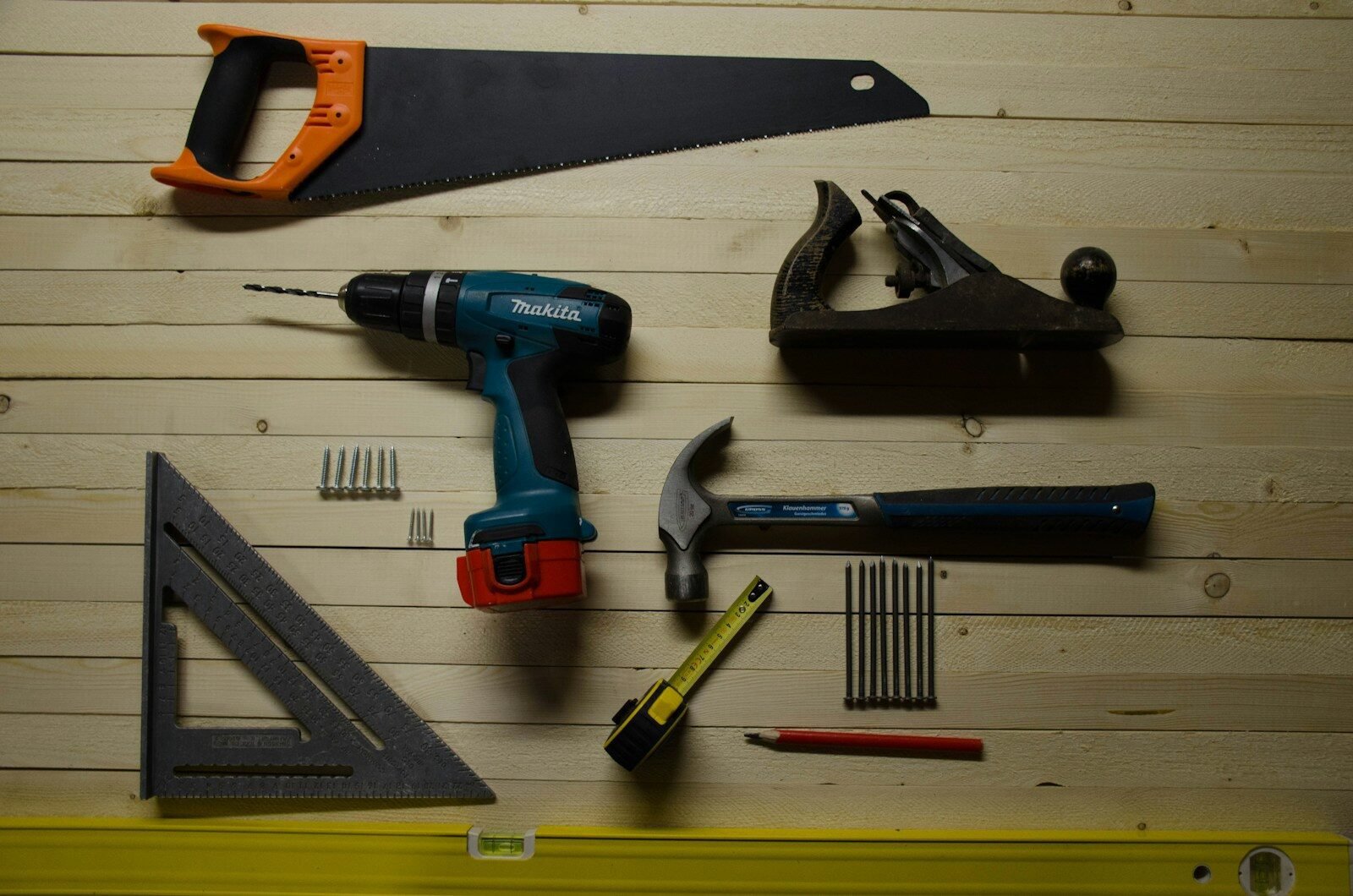
A good DIY toolkit does not need to contain hundreds of tools. The smarter approach is to start with tools that solve different types of problems: measuring, fastening, gripping, cutting, leveling, drilling, and holding materials securely.
For most people, the foundation should include a tape measure, screwdriver set, claw hammer, pliers, adjustable wrench, utility knife, level, cordless drill/driver, handsaw, and clamps. The exact tools you need will depend on whether your projects are mainly home repairs, furniture assembly, woodworking, decorating, or larger construction jobs.
The important distinction is that an “essential” tool should earn its space by being useful across multiple projects. A specialized tool might be excellent at one job, but it does not necessarily belong in a beginner’s first toolkit.
At a Glance: The 10 Tools
| Tool | Main job | Best for |
|---|---|---|
| Tape measure | Measuring and marking | Almost every DIY project |
| Screwdriver set | Driving and removing screws | Furniture, hardware, repairs |
| Claw hammer | Driving and pulling nails | Assembly, light construction, removal |
| Pliers | Gripping, twisting and holding | Repairs, fasteners, wires |
| Adjustable wrench | Turning nuts and bolts | Plumbing and general repairs |
| Utility knife | Controlled cutting | Cardboard, trimming, scoring |
| Level | Checking alignment | Shelves, frames, cabinets |
| Cordless drill/driver | Drilling and screw driving | Installation and construction |
| Handsaw | Cutting wood and similar materials | Woodworking and basic construction |
| Clamps | Holding work securely | Cutting, assembly and woodworking |
This list deliberately focuses on versatility rather than the number of pieces in a tool kit. Recent starter-tool guides follow a similar principle: a relatively small collection of general-purpose tools can cover many routine household jobs without requiring a garage full of specialized equipment.
1. Tape Measure
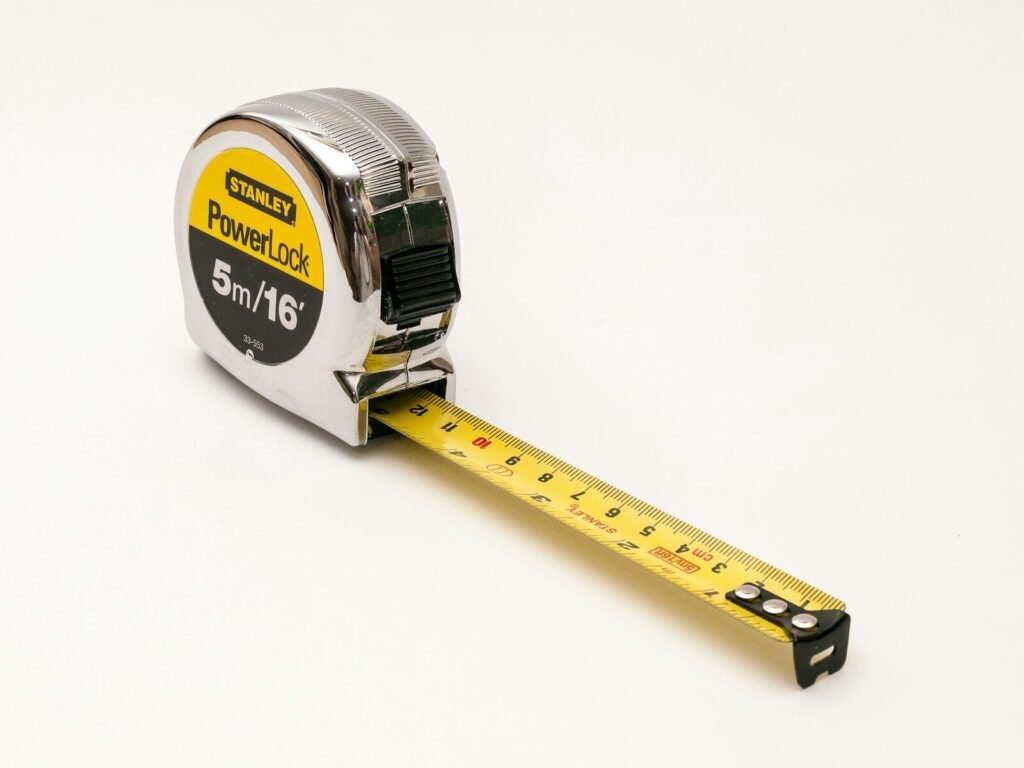
A tape measure is arguably the simplest tool on this list, but it is also one of the easiest to underestimate.
DIY projects frequently begin with a measurement. You may need to determine whether a shelf fits between two walls, how much material to cut, where to position hardware, or whether furniture will fit through a doorway.
A tape measure becomes especially valuable when paired with a pencil or marking tool. Measuring without marking can turn a straightforward project into repeated trips between the workpiece and measuring point.
What to look for
For a general-purpose toolkit, prioritize:
- Clear, easy-to-read markings
- A locking mechanism that is easy to operate
- A case that feels comfortable in your hand
- A length appropriate to the projects you normally undertake
You do not necessarily need the largest tape measure available. A compact tape that is easy to carry can be more useful for everyday repairs, while larger projects may justify a longer model.
Best for: Every DIYer.
Can you skip it? Practically speaking, no. If you measure anything you build, install, cut, or position, you need some form of reliable measuring tool.
2. Screwdriver Set
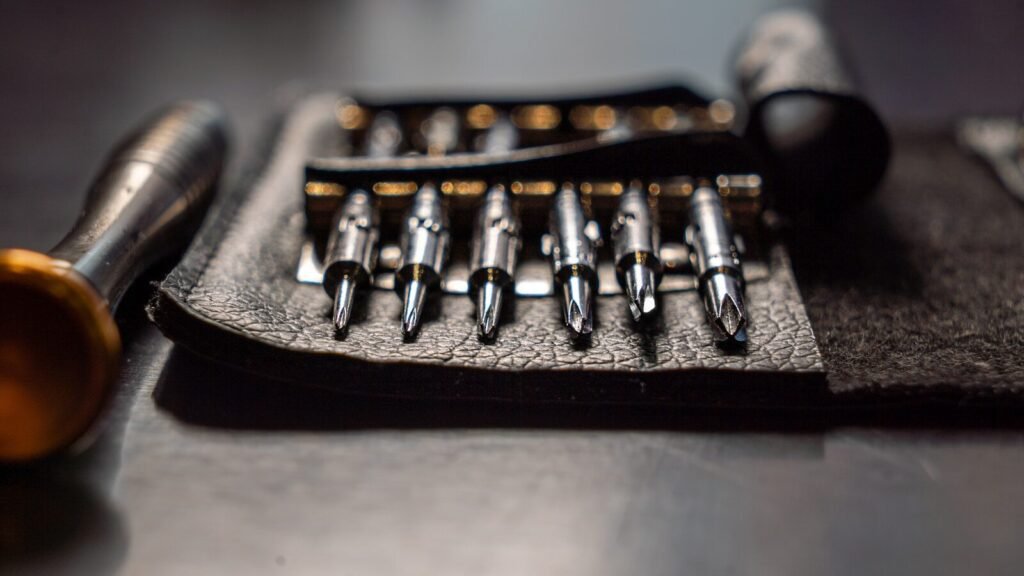
Screws are everywhere in household repairs and DIY projects. A screwdriver set therefore deserves a permanent place in almost every toolkit.
A basic set should cover common Phillips and flat-head screw types. A multi-bit screwdriver can also be a space-saving alternative because one handle accepts different interchangeable bits.
The important point is not to buy a huge assortment simply because it contains more pieces. The useful question is whether the set covers the fasteners you are actually likely to encounter.
A screwdriver should fit the screw head properly. Using an inappropriate size or type can damage the fastener and make removal considerably harder.
Set or multi-bit driver?
Traditional screwdriver set:
Better when you frequently work with several sizes and want a dedicated tool immediately available.
Multi-bit screwdriver:
Better when storage space and portability matter.
For a beginner, either approach can work. More experienced DIYers may eventually want both.
Best for: Furniture assembly, household repairs, hardware installation, and general maintenance.
3. Claw Hammer
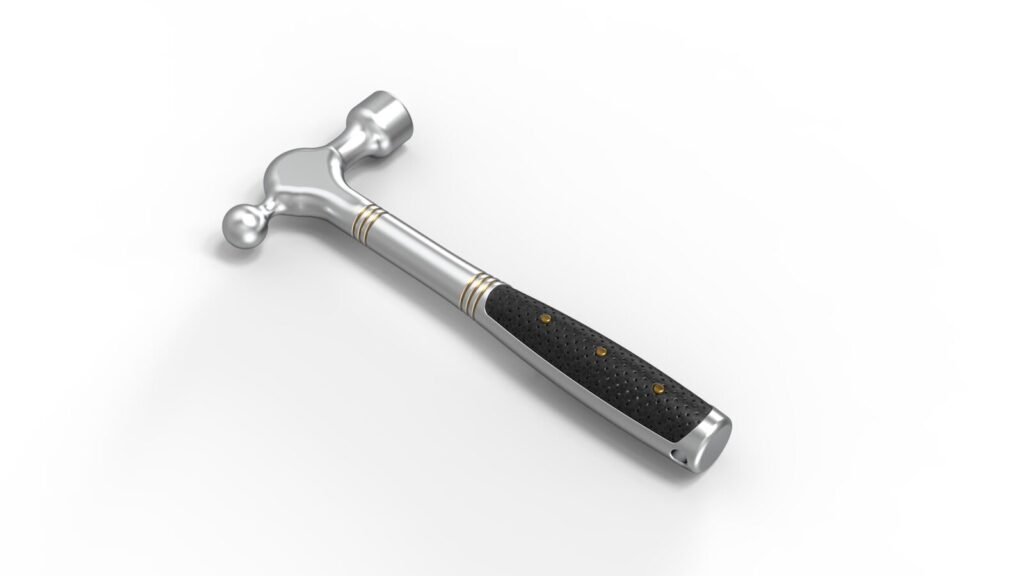
The claw hammer remains a useful general-purpose tool even in a toolkit that includes power tools.
Its familiar jobs include driving nails and pulling nails back out. The claw can also help with light removal and dismantling work, although a hammer should not automatically be treated as a substitute for a pry bar.
The right hammer is more about control than simply choosing the heaviest model available. A hammer that is unnecessarily heavy can make delicate work more difficult.
What makes a hammer useful?
Look for:
- A comfortable grip
- A well-balanced design
- A claw suitable for pulling nails
- A weight appropriate for the work you intend to do
If your projects mainly involve picture hanging, furniture assembly, small repairs, and light woodworking, you do not need to start with a collection of specialized hammers.
Best for: General repairs, nails, light construction, and removal work.
4. Pliers
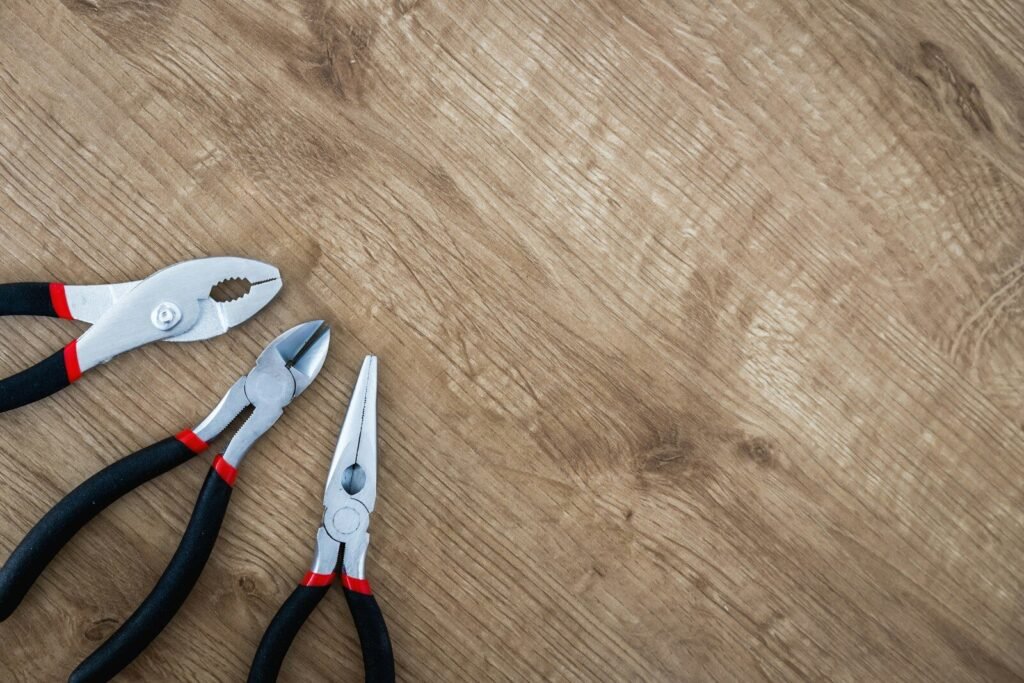
Pliers fill a different role from screwdrivers and wrenches: they provide controlled gripping.
A general-purpose pair can hold, twist, pull, bend, or manipulate materials that would be difficult to handle with your fingers. Different plier designs exist for different jobs, so a growing toolkit may eventually contain several types.
For a starter collection, versatile slip-joint or combination-style pliers are a reasonable starting point. Needle-nose pliers become particularly useful when working in narrow spaces or handling small components.
Why pliers belong in a basic toolkit
Consider a loose fastener that cannot easily be turned by hand, a small object that needs to be held while another tool is used, or material that needs to be bent. A screwdriver or wrench may not solve the problem, but pliers often can.
Best for: General repairs, gripping, twisting, holding, and small mechanical tasks.
5. Adjustable Wrench
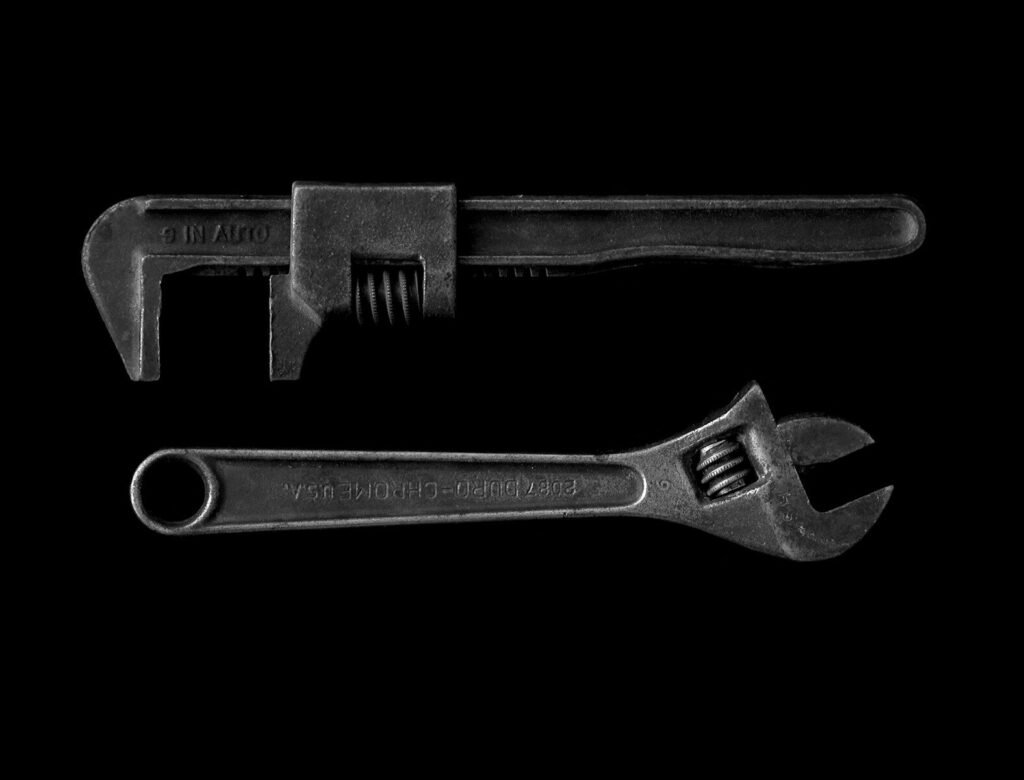
An adjustable wrench is useful when you encounter nuts and bolts of different sizes.
Instead of owning a separate fixed-size wrench for every fastener, the adjustable jaw allows one tool to cover a range of sizes.
That flexibility is useful for general household maintenance and plumbing-related tasks. However, an adjustable wrench is not always the best tool for every fastener. A correctly sized fixed wrench or socket can provide a better fit for some jobs.
This is an important lesson for beginners: versatility does not mean one tool is always the correct tool.
Use the adjustable wrench when its design suits the job rather than forcing it onto every nut or bolt.
Best for: General maintenance, plumbing-related work, and miscellaneous fasteners.
6. Utility Knife
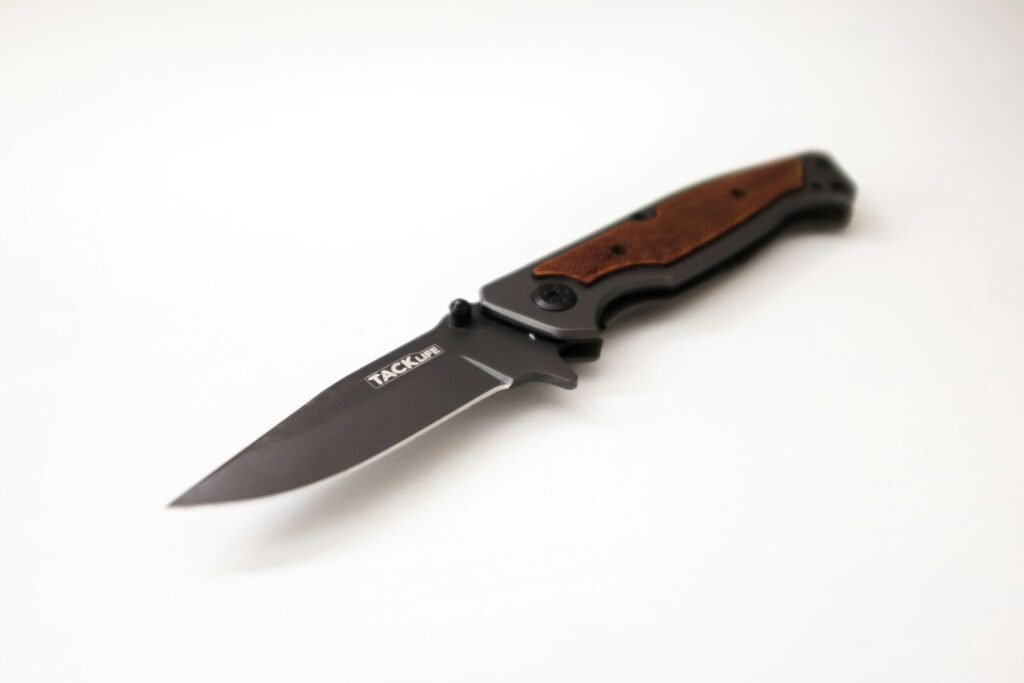
A utility knife is one of the most frequently useful cutting tools in a general DIY kit.
It can handle tasks such as cutting cardboard, trimming certain materials, opening packaging, and making controlled cuts where a larger saw would be unnecessary.
Because the blade is exposed during use, this is also a tool where technique matters. Keep the cutting direction away from your body and hands, use an appropriate cutting surface, and replace damaged or unsuitable blades rather than trying to force them through material.
A utility knife is not a replacement for a saw. Its value comes from handling smaller cutting jobs efficiently.
Best for: Trimming, scoring, packaging, and light cutting work.
7. Level
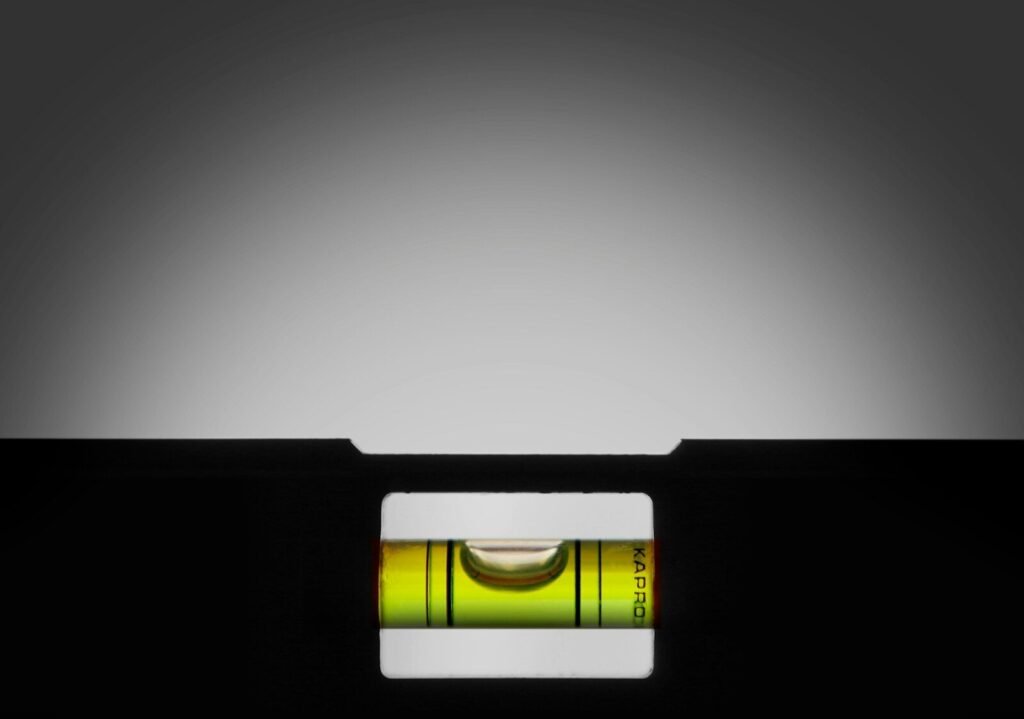
A level answers a deceptively important question:
Is it actually straight?
You can install a shelf that looks straight from a distance and still discover that it slopes noticeably once an object is placed on it. The same issue can affect pictures, cabinets, trim, fixtures, and other installations.
A level is therefore particularly useful for DIY work involving installation rather than simply repair.
A compact torpedo-style level can be convenient for smaller household jobs. Larger projects may benefit from a longer level because a longer reference surface can make alignment easier across larger areas.
When should you use one?
Use a level whenever the final position of an object depends on horizontal or vertical alignment.
Best for: Shelves, pictures, cabinets, fixtures, frames, and installation work.
8. Cordless Drill/Driver
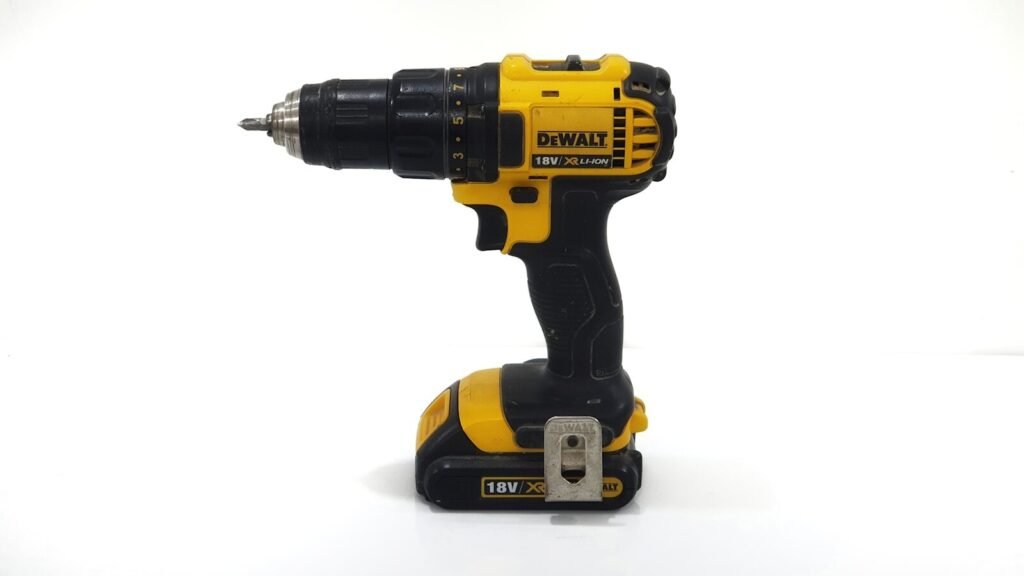
A cordless drill/driver is where a basic hand-tool collection begins to expand into power-tool territory.
It can perform two fundamental tasks: drilling holes and driving screws. That makes it useful for furniture assembly, installations, woodworking, and many other projects.
However, buying a drill does not automatically make someone ready for every drilling job. The correct bit must match the material and task, and the tool needs to be used appropriately.
For beginners, it is worth learning the basics of:
- Drill-bit selection
- Screw-driving bits
- Torque or clutch settings
- Speed control
- Battery care
- Safe handling
- What may be hidden behind a surface before drilling
The last point matters particularly when drilling into walls. A wall can contain electrical wiring, plumbing, structural components, or other concealed elements.
Why not buy every power tool immediately?
Because a drill/driver can cover a large range of common tasks while specialized power tools may sit unused between projects.
A recent WIRED starter-kit analysis similarly emphasized beginning with basic tools rather than accumulating a large collection of specialized equipment.
Best for: Installation, furniture, drilling, screw driving, and increasingly ambitious DIY projects.
9. Handsaw
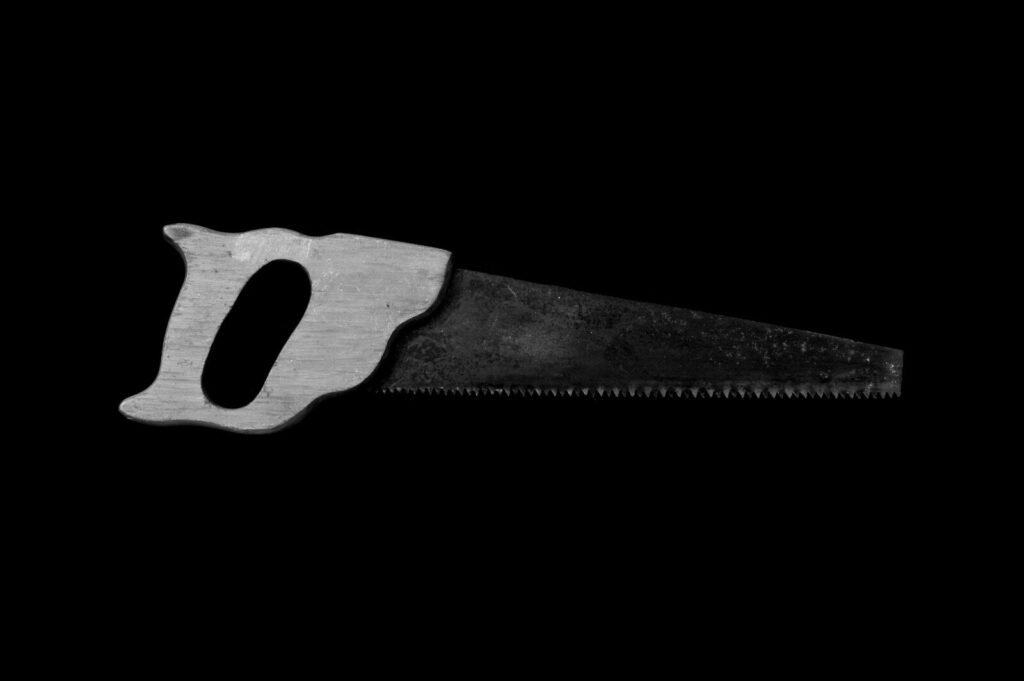
A handsaw gives a DIYer a straightforward way to cut wood without immediately investing in powered saws.
For basic woodworking and home projects, a suitable handsaw can be enough for relatively small cuts. It also forces the user to pay attention to measurement, cutting position, material support, and blade control.
That makes it useful beyond the physical cutting itself: it can help a beginner understand how materials behave before moving into more powerful equipment.
For larger or repeated cutting jobs, powered saws may eventually make more sense. But that is precisely why a handsaw belongs in the “start here” category rather than treating every power saw as an essential purchase.
Best for: Basic woodworking, small construction projects, and cutting wood.
10. Clamps
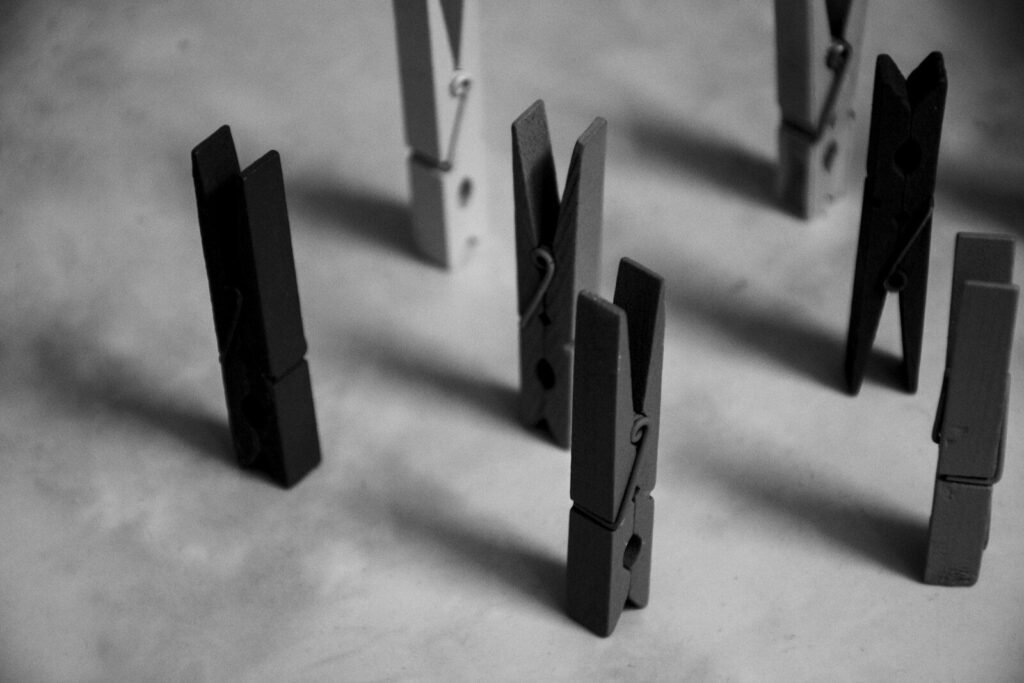
Clamps are sometimes left out of beginner tool lists because they do not directly cut, drill, screw, or measure.
That is a mistake if you plan to build things.
A clamp holds material in place while you work. That can make cutting, drilling, gluing, positioning, and assembly considerably easier.
More importantly, clamps can help prevent a workpiece from shifting unexpectedly. A secure workpiece is easier to control than one that moves while you are trying to cut or drill it.
Different projects require different clamp styles, so there is little reason for a beginner to buy a large assortment immediately.
Start with a small number of versatile clamps and add specialized versions when your projects justify them.
Best for: Woodworking, assembly, gluing, drilling, and holding materials securely.
The Tool You Need Most Depends on What You Build
There is no universally perfect 10-tool collection.
A person who mostly assembles furniture has different priorities from someone building wooden shelves. Someone repairing household plumbing will need different tools again.
Here is a practical way to think about it:
| Your typical projects | Tools to prioritize |
|---|---|
| Furniture assembly | Screwdrivers, drill/driver, tape measure, level, pliers |
| Hanging shelves and frames | Tape measure, level, drill/driver, screwdriver |
| Basic woodworking | Tape measure, handsaw, drill/driver, clamps, hammer |
| General household repairs | Screwdrivers, hammer, pliers, wrench, utility knife |
| Plumbing-related maintenance | Adjustable wrench, pliers, screwdrivers, utility knife |
| Larger construction projects | Drill/driver, saws, clamps, measuring tools, appropriate PPE |
The takeaway is simple: buy according to the jobs you actually expect to perform.
Tools You Should Not Rush to Buy
One of the biggest mistakes beginners make is confusing a large toolkit with a useful toolkit.
Specialized tools can be excellent, but purchasing them before you have a project that requires them ties up money and storage space.
Depending on your projects, tools such as these can usually wait:
- Circular saw
- Miter saw
- Table saw
- Impact driver
- Rotary tool
- Oscillating multi-tool
- Router
- Specialty plumbing tools
- Specialty automotive tools
- Advanced measuring equipment
That does not mean these tools are unnecessary. It means their value depends heavily on the work you do.
A DIYer who regularly builds furniture may quickly justify tools that a person who only hangs pictures would almost never use.
Safety Gear Is Part of a Responsible DIY Toolkit
Safety equipment is not technically one of the 10 tools above, but it should not be treated as an optional afterthought.
At minimum, consider appropriate eye protection for tasks that can produce flying particles or debris. Other projects may require additional protective equipment depending on the material, tool, dust, noise, or chemical exposure involved.
OSHA warns that hand and power tools can cause serious injuries when they are improperly used or maintained and provides dedicated guidance covering tool hazards and controls.
For woodworking and powered cutting equipment, the risks become even more significant. OSHA’s woodworking guidance highlights hazards including lacerations, amputations, severed fingers, and eye injuries, while emphasizing guards, proper equipment condition, safe operating practices, and appropriate protective equipment.
For powered saws and similar equipment, never treat the machine’s ability to make a cut as more important than controlling the workpiece and protecting your hands. OSHA specifically recommends appropriate guarding and keeping hands away from the point of operation.
How to Build Your DIY Toolkit Without Overspending
You do not have to purchase all 10 tools at once.
A sensible progression is:
Stage 1: Basic hand tools
Start with:
- Tape measure
- Screwdriver
- Hammer
- Pliers
- Adjustable wrench
- Utility knife
These cover a broad range of small repairs and household tasks.
Stage 2: Measuring and installation
Add:
- Level
- Cordless drill/driver
This opens the door to more installation and construction projects.
Stage 3: Building and woodworking
Add:
- Handsaw
- Clamps
At this point, the toolkit becomes more useful for making things rather than simply repairing them.
This staged approach also creates a useful feedback loop: each project tells you what tool you actually need next.
Should You Buy a Complete Tool Kit or Individual Tools?
Both approaches can make sense.
Complete tool kit
Advantages:
- Convenient starting point
- Usually provides multiple basic tools together
- Easy to store
- Can reduce the effort involved in choosing individual pieces
Potential drawbacks:
- May contain tools you rarely use
- Some kits prioritize piece count over useful selection
- You may still need to upgrade individual tools later
Individual tools
Advantages:
- You can prioritize quality where it matters
- Easier to tailor the kit to your projects
- Less money spent on unwanted pieces
Potential drawbacks:
- Takes longer to assemble
- Requires more knowledge about what you actually need
- Storage can become less organized
For a complete beginner, a thoughtfully selected starter kit can be convenient. For someone who already owns a few tools, buying individual additions is often more logical.
What Makes a DIY Tool Worth Buying?
Rather than asking whether a tool is “the best,” consider five practical questions:
1. How often will I use it?
A tool used every week deserves more attention than one used once every three years.
2. Does it solve multiple problems?
Versatility matters when storage space and budget are limited.
3. Is it appropriate for my skill level?
A more powerful tool is not automatically a better beginner tool.
4. Can I buy it later?
If the answer is yes, there is usually little reason to rush.
5. Is safety part of the decision?
A tool should be evaluated not just by what it can do, but by whether you understand how to use it safely.
This approach is more useful than simply counting how many pieces are included in a toolbox.
Common DIY Toolkit Mistakes to Avoid
Buying based on piece count
A 100-piece kit sounds impressive, but the number alone tells you little about whether the kit contains the tools you actually need.
Buying specialized power tools too early
A tool sitting unused in storage provides little value. Let your projects determine when specialization becomes worthwhile.
Ignoring measuring tools
Many DIY problems begin before the cutting or drilling stage. Incorrect measurements can make even a perfectly executed cut useless.
Using the wrong tool for the job
Pliers are not a universal wrench. A screwdriver is not a pry bar. A utility knife is not a substitute for every saw.
Using a tool outside its intended role can damage the tool, the material, or the user.
Treating maintenance as optional
Tools need to remain in usable condition. Damaged handles, worn blades, faulty guards, or deteriorated components should not simply be ignored.
Frequently Asked Questions
What are the most important tools for a beginner DIYer?
A practical starting point includes a tape measure, screwdriver, hammer, pliers, adjustable wrench, utility knife, level, and cordless drill/driver. Add a handsaw and clamps if you expect to build or modify things.
Do I need power tools to start DIY?
No. Many basic repairs and assembly tasks can be completed with hand tools. A cordless drill/driver becomes useful as projects become more involved, but it does not need to be the first tool you buy.
Is a complete tool kit worth buying?
It can be, especially for someone starting from nothing. However, compare the actual tools included rather than choosing based solely on the number of pieces.
What tools should I buy first?
Start with tools that correspond to the jobs you expect to do most often. For general household DIY, measuring, fastening, gripping, cutting, and basic drilling are good priorities.
How important is a level for DIY?
Very important for projects where alignment matters. Shelves, cabinets, frames, pictures, and many installations can look noticeably wrong when they are not level.
Are expensive DIY tools always better?
No. Price alone does not determine whether a tool is appropriate. The right choice depends on the tool’s construction, functionality, reliability, ergonomics, intended workload, and your specific needs.
What safety equipment should DIYers have?
Eye protection is an important starting point, while additional protective equipment depends on the task. Powered cutting and woodworking operations can create substantially greater hazards and require appropriate safeguards and protective measures.
Final Verdict
The best DIY toolkit is not the biggest one. It is the one containing tools you can confidently use for the projects you actually undertake.
For a general-purpose starting collection, the tape measure, screwdriver set, hammer, pliers, adjustable wrench, utility knife, level, cordless drill/driver, handsaw, and clamps provide a strong foundation. They cover the fundamental actions behind a wide range of DIY work: measuring, fastening, gripping, cutting, drilling, aligning, and holding.
The biggest mistake is buying tools according to what looks impressive rather than what solves your problems. Build the core collection first, learn to use each tool properly, and let your projects determine what comes next.
And before moving into powered cutting, woodworking machinery, or unfamiliar electrical or mechanical work, take the safety side seriously. OSHA’s guidance makes clear that even ordinary hand and power tools can cause serious injuries when used or maintained improperly.
A well-chosen 10-tool foundation will not make you capable of every DIY project—and it should not. Its purpose is to give you a practical starting point without filling your workshop with equipment you do not yet need.
External Sources
- OSHA — Hand and Power Tools: authoritative overview of hazards and safety considerations for hand and power tools.
- OSHA — Hand and Power Tools: Hazards and Solutions: additional safety resources and guidance.
- OSHA — Woodworking: useful reference for hazards associated with woodworking equipment and protective measures.
- OSHA — Woodworking Machine Hazards: detailed guidance concerning guards, point-of-operation hazards, workpiece control, and safe operation.
Author Bio
TrendCritique Editorial Team
TrendCritique publishes researched guides, reviews, comparisons, explainers, and consumer-focused analysis designed to help readers make better-informed decisions. Articles are prepared using available authoritative sources and are written with an emphasis on accuracy, transparency, practical usefulness, and independent analysis.