
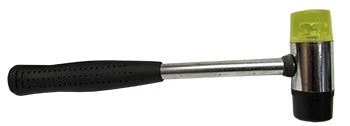
The 15780- value professional glazing hammer is a small, dual-headed craft hammer — one end hard plastic, one end rubber — made for stained glass and leaded-glass work: setting horseshoe nails and gently tapping glass into lead or zinc came without cracking it. It is not a specialty precision instrument. It’s a simple, low-cost hand tool, and the evidence gathered for this review points to one conclusion that most listings won’t tell you: the exact same tool, often under the exact same product code, is sold by different stained-glass retailers for anywhere from roughly $4 to nearly $25. Size and weight vary between two common versions, but within each version, price is mostly a function of which store you happen to land on — not build quality. For most buyers, that means the “value” in this hammer’s name is real, but only if you shop the code, not the storefront.
Table of Contents
- What a 15780- value professional glazing hammer Actually Does
- Inside the 15780: What You’re Actually Buying
- The Real Story: One Tool, a Dozen Price Tags
- Large vs. Small: The Two Versions Sold Under This Name
- What Buyers Actually Say
- Where the Design Has Real Limits
- Who Should Buy It — and Who Shouldn’t
- Alternatives Worth Considering
- Getting the Most Out of It
- Buying Guide: How to Decide Where to Buy
- FAQs
- Final Verdict
What a 15780- value professional glazing hammer Actually Does
The name causes some confusion, so it’s worth clearing up first. In the stained-glass trade, “glazing” refers to the final assembly step of a leaded panel — fitting cut glass pieces into channeled lead or zinc came and securing everything before soldering. A glazing hammer is the small tool used during that step: its hard plastic face taps in horseshoe nails (temporary pins that hold pieces of glass and came in position on the workboard) or seats came firmly, while its rubber face gently taps glass into the came channel without chipping or cracking it.
That’s a different tool from what a traditional window installer might call a “glazier’s hammer” — a small tack hammer historically used to drive glazing points into a wooden window sash when installing a single pane with putty. The two tools share a name and a broad function (small, controlled tapping near glass) but are used in different trades. Several listings for hammers in this exact style also market them for general “glazing window beads” work, meaning the same dual-face design shows up outside the stained-glass hobby world too. If you searched for a glazing hammer expecting a traditional sash-glazing tool, this is not that; if you’re doing leaded or copper-foil stained glass work, it is.
Inside the 15780: What You’re Actually Buying
Based on the manufacturer-level description used by the original listing and mirrored word-for-word across several other stained-glass retailers, the 15780 has:
- Head: Metal core with two press-fit caps — one hard plastic, one rubber
- Length: 10-3/4 inches
- Head diameter: 3 inches / 25mm
- Weight: Approximately 10 ounces
- Handle: Rubber-gripped
- Country of origin (per an eBay listing of the same item): China
That’s the “large” or “Professional” version. A second, lighter version of essentially the same design is also sold — more on the difference between the two below.
None of the listings reviewed for this article include third-party lab testing, torque or impact ratings, or independent durability data, and none should be expected for a tool in this price and category range. What follows is drawn from manufacturer specifications, publicly available product listings, and customer reviews that were actually posted on retailer sites — not from hands-on testing by TrendCritique, which we want to be upfront about.
The Real Story: One Tool, a Dozen Price Tags
This is the part most single-retailer product pages won’t show you, because they only show their own price. Looking across multiple stained-glass suppliers that list this hammer with matching specs — 10-3/4″ length, 3″/25mm head, roughly 10 oz weight, plastic-and-rubber dual face — the same item turns up at dramatically different prices.
| Retailer | Listed Price | Size / Spec Match | Notes |
|---|---|---|---|
| Rainbow Art Glass | $4.38 | Large — 10¾” L, 3″ head (25mm), ~10 oz | Listed as product code 15780; marketed as a “Rainbow Exclusive” |
| Franklin Art Glass | $8.95 (1–2 units), dropping to $4.92 at 9+ units | Large — 10¾” L, 3″ head (25mm), 10 oz | Identical spec sheet to the 15780 listing, different SKU (7915-0123) |
| Maple City Stained Glass | $24.99 | Listed as “15780 Glazing Hammer” | Same product code as Rainbow’s listing, over 5x the price |
| Amazon (Sunshine Glassworks) | $15.95 | Large — matches 10¾”/3″/25mm spec, labeled “Large Professional” | Marketplace price, can fluctuate |
| Delphi Glass | $20.95 | Small — 9½” L x 2½” W | Different item number; 7 customer reviews averaging 4.9/5 stars |
| Walmart (Bold brand, #408102) | $12.54 | Small — 9½” L x 2½” W | Sold under the “Bold” brand name, SKU VRDG227 |
A few things stand out. First, the exact same product code — 15780 — appears at $4.38 on one site and $24.99 on another, a difference of more than 5x for what the listings describe as the same item. Second, Franklin Art Glass’s tiered wholesale-style pricing ($8.95 down to $4.92) gives a rough sense of what this style of tool actually costs to source, and it lines up much closer to Rainbow’s price than to Maple City’s or Delphi’s. Third, “exclusive” branding language on one listing doesn’t hold up well against the fact that a matching product code and matching specs are listed by at least three other independent sellers.
Large vs. Small: The Two Versions Sold Under This Name
Beyond store-to-store pricing, there’s a second, more legitimate source of variation: this design is sold in two distinct sizes, and it’s easy to compare listings across sizes without realizing it.
| Spec | “Professional” / Large (15780-style) | Small / Lightweight (15781-style) |
|---|---|---|
| Length | 10-3/4″ | 9-1/2″ |
| Head width/diameter | 3″ (25mm) | 2-1/2″ |
| Weight | ~10 oz | ~6 oz |
| Typical marketing | “Professional Glazing Hammer” | “A must for small projects,” described as lighter than the Professional version |
| Best suited for | Larger panels, more came, sustained work sessions | Small panels, delicate glass, jewelry-scale or ornament work, users who want less arm fatigue |
If you’re comparing prices across retailers, check which version is actually listed — a $20 small hammer is not directly comparable to a $4 large one, even though both get marketed with words like “professional” and “value.” The size and weight difference is a legitimate design trade-off; the price difference for the same size is not.
What Buyers Actually Say
Direct customer reviews for the exact 15780- value professional glazing hammer listing were not available at the time of research — Rainbow Art Glass’s own product page had none posted. That’s a real gap, and it’s worth naming rather than papering over.
Reviews do exist for closely comparable versions of this design sold by other retailers, and they’re worth weighing even though they’re not for the identical SKU. Delphi Glass’s version of this hammer (the smaller, 9-1/2″ size) has seven customer reviews averaging 4.9 out of 5 stars, with comments describing it simply as a good, reliable tool with no reported failures. Separately, a reviewer on an Amazon listing for the larger “15780- value professional glazing hammer” described having done stained glass work for decades using a different, heavier type of hand tool, and found this hammer’s lighter weight and balance well suited to the work — a useful data point from someone with a long frame of reference, even though it’s a single review rather than a pattern.
Taken together, the available feedback is consistently positive and free of major recurring complaints, but it’s thin. This is a low-cost, low-attention-getting tool — the kind people buy, use for years, and never think to review. Treat the positive signal as real but limited, not as proof of long-term durability across heavy daily use.
Where the Design Has Real Limits
Several retailers describe the head construction the same way: a metal hammerhead with two press-fit caps, rather than a single molded or forged striking face. That construction detail — confirmed independently by more than one seller’s own product description, not assumed by us — points to a couple of inherent, predictable limitations of this style of tool in general, regardless of which retailer you buy it from:
- Cap wear and replacement. Press-fit rubber and plastic caps on any tool in this category are a wear part. Over years of regular striking, they can loosen, deform, or need replacement before the metal core does. None of the listings reviewed mention whether replacement caps are sold separately, which is worth asking a retailer directly if you plan on years of heavy use.
- No adjustable or swappable striking force. Unlike some higher-end glazing/bead-installation hammers on the broader market that offer interchangeable heads in different densities (some listings for similar-style hammers outside the stained-glass niche mention swappable 30mm/35mm/40mm heads), this basic design gives you one rubber hardness and one plastic hardness, fixed.
- No stated warranty or lifetime guarantee appears on any of the listings reviewed. At this price point that’s normal for the category, but it’s a real limitation compared to premium hand tools that do offer one.
These are reasoned, design-based observations, not documented failure reports — no seller’s page or review mentioned the hammer breaking, and this article isn’t claiming that it does. They’re simply the trade-offs inherent to a two-piece, press-fit striking head at this price tier, and they’re the questions worth asking before assuming a $20+ version is meaningfully more durable than a $5 one with the same construction.
Who Should Buy It — and Who Shouldn’t
Good fit for:
- Beginners assembling a first stained-glass tool kit who don’t want to overspend on a tool they’re still learning to use
- Hobbyists who already own most other lead-came tools and just need to replace a lost or worn hammer
- Anyone doing occasional or seasonal leaded-glass projects rather than daily production work
- Buyers who are price-sensitive and willing to shop around rather than buy from the first listing they find
Consider an alternative, or at least budget more carefully, if you are:
- A working studio doing daily, high-volume leading work, where a single-piece forged or nylon-faced head (with no press-fit caps to wear loose) may hold up better over thousands of strikes
- Someone who wants a manufacturer warranty or a documented return policy tied specifically to tool defects, not just general retailer return windows
- A buyer who wants swappable head densities for different came metals (lead vs. zinc vs. brass), which this fixed two-face design doesn’t offer
Alternatives Worth Considering
- A separate rubber mallet + tack hammer combo. Some crafters simply use two dedicated tools instead of one dual-head hammer — a small rubber mallet for glass and a lightweight tack or ball-pein hammer for nails. This avoids the press-fit cap wear point entirely, at the cost of carrying two tools instead of one.
- Nylon-faced hammers with interchangeable heads. Outside the stained-glass-specific retail niche, similar dual-face hammers are sold for general glazing and bead-installation work with swappable 30mm/35mm/40mm nylon and rubber heads, letting you replace a worn face without replacing the whole tool. These run in a similar $9–$22 range depending on seller.
- A dedicated “Pro Glazier’s Hammer” from a stained-glass specialty retailer, several of which are sold under that name with the same basic two-face concept — worth comparing on weight and head material if you want something slightly different from the standard 15780-style spec.
Getting the Most Out of It
A few general, low-risk practices for tools in this category, based on how they’re designed to be used rather than on any manufacturer-specific instructions (none of the listings reviewed included a care guide):
- Use the plastic face for nails and came, and the rubber face for glass — swapping the two increases the odds of chipping glass or under-driving a nail.
- Store it away from prolonged heat exposure (like a hot car or a sunny windowsill), which can soften or deform rubber and plastic components over time — a generic material-science consideration for any rubber/plastic-faced hand tool, not a documented issue specific to this one.
Buying Guide: How to Decide Where to Buy
- Decide which size you actually need first. Large (10¾”, ~10 oz) for bigger panels and sustained work; small (9½”, ~6 oz) for delicate or small-scale pieces. Don’t compare prices across sizes.
- Once you know the size, compare price per matching spec, not per listing. Search the product code or the exact dimensions rather than buying from the first page that comes up.
- Factor in shipping and bundling. A $4.38 hammer with $8 shipping from a small supplier may cost more delivered than a $12.54 listing with free shipping over a certain order size. Compare landed cost, not sticker price.
- If you’re already ordering lead came, solder, or horseshoe nails from a particular stained-glass supplier, buying the hammer from the same order can offset a slightly higher per-item price through combined shipping — a legitimate reason to pay more at one retailer over another.
- If durability under heavy daily use matters more to you than price, ask the retailer directly whether replacement caps are available, since none of the listings researched state this outright.
FAQs
Is the 15780- value professional glazing hammer the same thing as a window glazier’s hammer? Not quite. It’s built for stained-glass and leaded-glass assembly — tapping horseshoe nails and seating glass in lead or zinc came. A traditional window glazier’s hammer, used for installing glass panes with putty and glazing points, is a related but historically distinct tool, even though the names overlap.
Why does the exact same product code cost $4.38 at one store and nearly $25 at another? Based on the listings compared for this article, it appears to be largely retailer markup and business-model differences (shipping policy, brick-and-mortar overhead, bundling) rather than any documented difference in the product itself. Always check the size and spec before assuming a price difference reflects quality.
Which size should a beginner buy — large or small? For general stained-glass panel work with standard lead came, the large (10¾”, ~10 oz) version is the more commonly recommended default in most tool kits and bundles reviewed. The small, lighter version suits delicate glass, small ornaments, or users who want less hand fatigue during long sessions.
Is this a good tool for a beginner’s first stained-glass kit? Yes, on the evidence available: it’s inexpensive, does the two jobs (nail-setting and glass-tapping) that beginners specifically need, and the limited customer feedback found for comparable versions is positive.
Final Verdict
Biggest strength: It does exactly what a beginner or hobbyist leaded-glass project needs — one tool for setting nails and one for tapping glass — at a genuinely low cost when bought from the right listing, and the limited available customer feedback on comparable versions is consistently positive.
Biggest weakness: The press-fit, two-cap head construction is a known trade-off of this design style, no listing reviewed offers a stated warranty or confirms replacement caps are available, and “professional” or “exclusive” language in some listings isn’t well supported by the fact that matching specs and product codes are sold elsewhere for a fraction of the price.
Who should choose it: Beginners, hobbyists, and anyone doing occasional leaded-glass work who wants an inexpensive, functional tool and is willing to compare a couple of listings before buying.
Who should consider an alternative: Daily-use studios and anyone who specifically wants swappable striking heads, a manufacturer warranty, or a single-piece (non-cap) striking face.
Is it worth the money? At the low end of the price range found in this research (roughly $4–$9), yes, clearly. At the high end (roughly $20–$25) for a design with tiered wholesale pricing available elsewhere for under $9, the same tool is harder to justify unless bundled shipping or retailer service genuinely offsets the difference for you.
Most important thing to know before buying: This is very likely the same basic tool under most of the names it’s sold under. Match the size spec you need, then shop the price — not the brand name on the listing.
Comparison Table: Retailer Price Snapshot
| Retailer | Price | Size | Source Verified |
|---|---|---|---|
| Rainbow Art Glass (15780) | $4.38 | Large (10¾”/3″/25mm) | Product page |
| Franklin Art Glass (7915-0123) | $8.95 → $4.92 tiered | Large (10¾”/3″/25mm) | Product page |
| Amazon – Sunshine Glassworks | $15.95 | Large (“Professional”) | Product listing |
| Maple City Stained Glass | $24.99 | Labeled “15780” | Tool page |
| Walmart – Bold #408102 | $12.54 | Small (9½”/2½”) | Product listing |
| Delphi Glass (#5138) | $20.95 | Small (9½”/2½”) | Product page, 7 reviews, 4.9★ |
Prices reflect the listings at the time of research and are subject to change — always confirm current pricing on the retailer’s site.
External Sources
- Rainbow Art Glass — 15780- Value Professional Glazing Hammer product page
- Franklin Art Glass — Glazing Hammer product page
- Delphi Glass — Glazing Hammer product page
- Maple City Stained Glass — Came Tools page
- Walmart — Bold 408102 Glazing Hammer listing
- Amazon — Large Professional Glazing Hammer for Lead Came Stained Glass Work
- Amazon — Professional Glazing Hammer for Lead Work, customer review reference
- David Albert Stained Glass Studio — 15780-Value Glazing Hammer listing
- eBay — 10.75″x3″ Professional Double Sided Glazing Hammer listing (origin/MPN reference)
- Google Patents — US703790A, “Glazier’s Hammer” (1902), historical background reference
Author Bio
This review was researched and compiled by TrendCritique’s tools and craft-supplies desk. It is based on manufacturer specifications, publicly listed retailer pricing. TrendCritique did not conduct hands-on testing of this product. Where testing-derived claims would normally appear. This article instead relies on transparent sourcing and comparative analysis across multiple listings, disclosed accordingly throughout.