
Table of Contents
Choosing a wedding venue comes down to four decisions made in order your budget ceiling, your realistic guest count, your date flexibility, and how much coordination you’re willing to do yourself. Get those four settled before you tour anywhere — venues you’ll love exist at almost every price point, but touring before you know your numbers is the single biggest reason couples overspend or fall for a space that doesn’t actually fit.
- Why the Venue Decision Comes First
- What Wedding Venues Actually Cost in 2026
- Venue Types Compared
- All-Inclusive vs. À La Carte: Which Fits You?
- When to Start Touring and Booking
- The Site Visit: What to Actually Ask
- Hidden Fees and Contract Traps
- Guest Count, Capacity, and Flow
- Weather, Backups, and Accessibility
- Mistakes Couples Make (That Competing Guides Skip)
- Who Should Choose What
- Comparison Tables
- FAQs
- Final Verdict
Why the Venue Decision Comes First
Most planning checklists tell you to book the venue before anything else, and there’s a real reason for that beyond tradition. Your venue locks in your date, and your date determines which photographers, caterers, and officiants are even available. Industry data indicates that the large majority of couples — around 82% — book their venue before any other vendor. It also typically consumes the largest single slice of the budget, which means getting it wrong early has knock-on effects on everything you book afterward.
That’s why “how to choose a venue” is really a budget question wearing a logistics costume. If you skip the budget step and go straight to Pinterest boards and showroom tours, you’ll fall for venues that are wrong for your finances before you’ve even started comparing them honestly.
What Wedding Venues Actually Cost in 2026
Here’s something most venue guides won’t tell you upfront: the “average wedding cost” you see quoted depends heavily on which survey produced it, and the numbers genuinely disagree with each other.
One widely cited 2026 study puts the US national average venue cost at $12,900, with actual prices ranging from under $3,000 for a rustic barn rental up to $20,000–$30,000 or more for a city hotel ballroom or private estate, before catering is factored in. That same study estimates venue spend represents roughly a third of the average total wedding budget, which it places around $34,200.
A separate industry market analysis tells a wider story. It estimates 2025 average total wedding costs at $34,000–$36,000, with venues capturing 24–40% of that spend — somewhere between $8,500 and $14,300 per wedding. More usefully, it notes the median cost (the middle of the distribution) was closer to $13,195 in a separate 2024 report, a much lower figure than the average, which points to extreme spending stratification across the market — in plain terms, a relatively small number of very expensive weddings pull the “average” up, while most couples spend considerably less than that headline number suggests. If a $34,000 average feels alarming, the median is a more honest number to benchmark yourself against.
Venue Types Compared
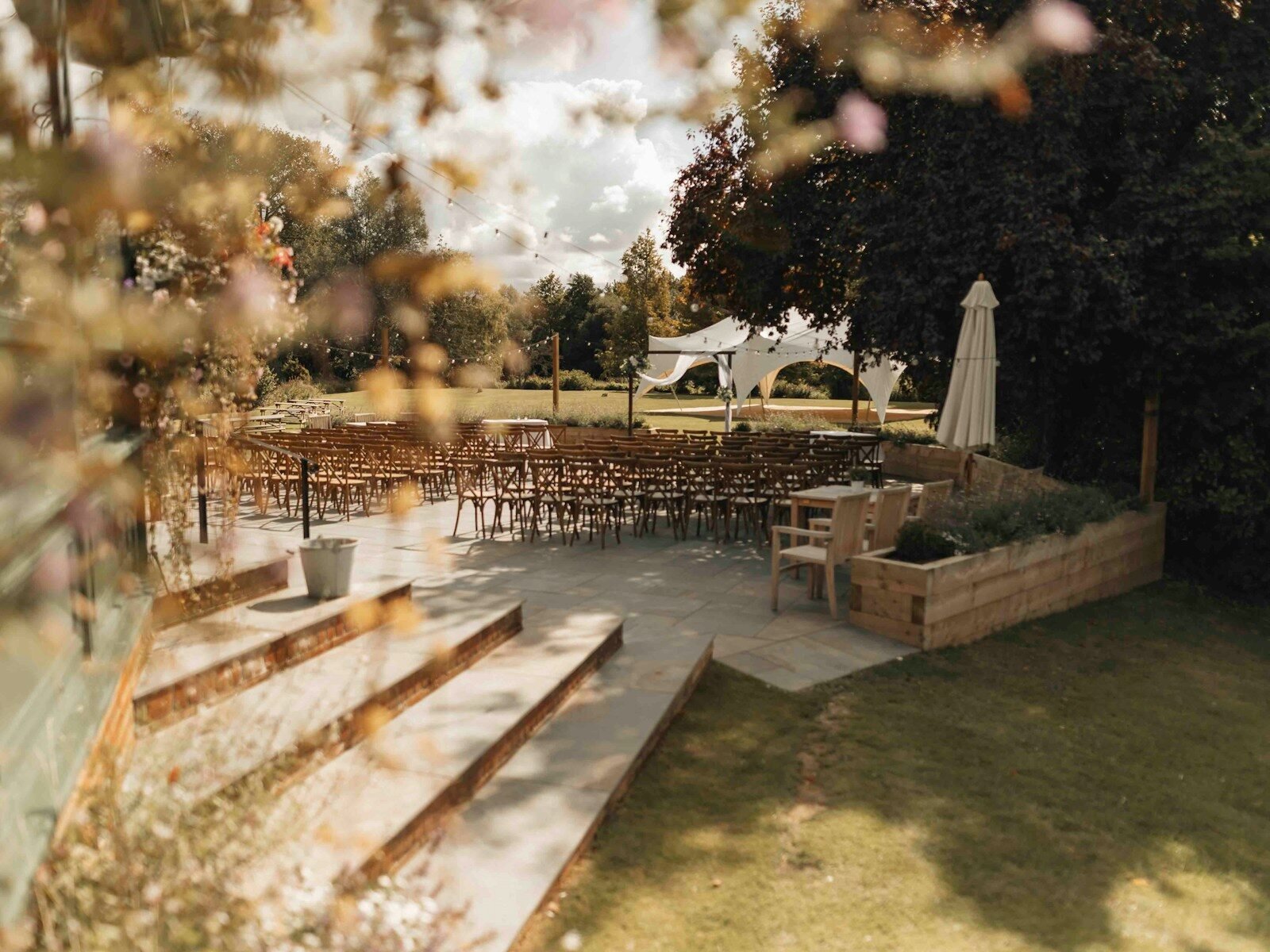
Different venue categories aren’t just different aesthetics — they carry structurally different cost patterns and levels of hidden work. A hotel ballroom typically ranges from $5,000 to $20,000 and usually bundles tables, chairs, linens, in-house catering, and a coordinator into the price, while a winery or vineyard estate runs a comparable $8,000 to $20,000 and typically includes both ceremony and reception space with basic rentals. Barns, backyards, and other “bare” venues can look far cheaper on the surface, but that number rarely includes rentals, portable restrooms, a tent, lighting, or a caterer — costs that get added back in once you start booking separately.
See the full comparison table below for a side-by-side breakdown by venue type.
All-Inclusive vs. À La Carte: Which Fits You?
This is a decision most guides gloss over, but it shapes everything about your planning experience.
An all-inclusive venue — a banquet hall, resort, or full-service property — bundles catering, rentals, and often a coordinator into one contract. You trade some customization for predictability: one price, one point of contact, fewer moving parts to manage. This tends to suit couples with demanding jobs, long-distance planning, or simply no appetite for coordinating six different vendors on their own.
A bare venue plus your own vendors gives you full control over caterer, florist, rentals, and timeline, and it can be cheaper if you’re comfortable doing the legwork. But every additional vendor is another contract, another deposit, and another place a mistake can happen. Couples who go this route without a wedding planner often underestimate how much time it takes to manage five or six separate suppliers instead of one.
Neither approach is objectively better. It’s a trade between money and time, and being honest about which one you actually have more of will save you frustration later.
When to Start Touring and Booking
Most couples book their venue somewhere between 12 and 18 months before the wedding, which balances having enough date availability against not spending years in a holding pattern. Popular venues booking a peak-season Saturday — October is frequently cited as the busiest month — can be reserved 18 to 24 months out, and booking culture also varies by country: UK couples tend to lock in venues roughly twice as far ahead as US couples on average.
A practical sequencing:
- 15–18 months out: Set your budget and rough guest count, research venues online, and shortlist 3–5 that fit both.
- 12–15 months out: Tour your shortlist in person (or via detailed video walkthrough if touring isn’t feasible).
- 12–14 months out: Sign the contract and pay the deposit once you’ve settled on a date and venue together.
If you’re working with a shorter runway — six months or less — you’re not out of options. Weekday dates, off-season months (January, February, and midsummer in many US markets), and Sunday weddings routinely have far more availability, often at a discount, because most couples still default to Saturday.
The Site Visit: What to Actually Ask
A site visit is where a venue’s marketing photos meet reality. Beyond the obvious “is it available and how much does it cost,” a few questions consistently separate a smooth booking from a stressful one:
- What’s genuinely included, and what costs extra? Tables and chairs “included” can still mean a $500 linen rental fee.
- Do you host more than one event per day? If a venue runs multiple events in a single day, ask how they manage timing and privacy so your event doesn’t feel rushed or overlap with another party.
- What’s your cancellation and postponement policy, and how much of the deposit is refundable?
- Is there a backup indoor space for outdoor ceremonies, and does it cost extra to activate it?
- What are load-in and load-out logistics — is there a loading dock or elevator, and are there restrictions on timing for vendors?
- How flexible is the vendor list? Some venues require you to use their in-house or “preferred” caterer, florist, or bar service.
Bring a written list. It’s easy to get swept up by a beautiful space and forget to ask the unglamorous questions that actually determine your final bill.
Hidden Fees and Contract Traps
This is the part of venue shopping that causes the most after-the-fact regret, and it’s worth slowing down for.
Service charges and gratuity. Often 18–25% on top of catering, and not always shown in the headline quote.
Corkage fees. If you plan to bring in your own alcohol, many venues charge a corkage fee that can range from roughly $10 to $50 per bottle, and some also require you to use their bartending staff.
Cake-cutting fees. Some venues charge a per-slice fee to cut and serve a cake you brought in yourself, even when it’s homemade — worth confirming before you assume your aunt’s cake is free.
Required vendor fees. Some properties technically allow outside vendors but effectively require you to use a “preferred” list, and those vendors can carry markups tied to their relationship with the venue.
Cleanup and teardown. Setup, cleanup, and teardown are frequently billed separately, or left entirely to the couple, particularly at barns and private-property venues.
Liability and wedding insurance. Ask specifically what public liability insurance the venue carries, since damage or injury coverage isn’t automatic everywhere, and note that some venues require couples to purchase their own event insurance separately, which typically runs $125 to $550 for a basic policy.
Rental costs at “bare” venues. Couples who choose venues without built-in furniture and décor spend an average of roughly $1,800 on event rentals — a cost that’s easy to forget when comparing a low site fee against an all-inclusive package.
None of these fees are dealbreakers by themselves. The problem is when several stack up unnoticed and turn a “$9,000 venue” into an $14,000 one. Ask for an itemized quote, not just a headline number, before you sign anything.
Guest Count, Capacity, and Flow
Your guest count isn’t just a number for the caterer — it determines which venues are even physically viable. A space rated for 150 might technically fit your 120 guests but feel cramped once you add a dance floor, DJ booth, and bar. Ask about maximum capacity for both the ceremony and reception configurations separately, since many venues convert one room between the two and lose usable space in the process.
Guest counts have stayed fairly stable in recent years — the average UK wedding, for example, has held around 80 guests since 2021, and very small “micro” weddings of 20 or fewer have actually become less common rather than more, dropping from about 10% of weddings to roughly 5.5%. That runs counter to the “everyone’s having tiny weddings now” narrative a lot of content repeats — worth knowing if you’re weighing whether to trim your list dramatically for cost reasons.
Weather, Backups, and Accessibility
If you’re drawn to an outdoor or semi-outdoor venue, confirm the backup plan in writing, not just verbally during the tour. Ask what triggers the move indoors (a rain call the morning of, or a firm cutoff time), who makes that call, and whether the indoor alternative costs extra or requires a different layout that changes your guest capacity.
Accessibility is worth raising even if none of your current guests use mobility aids — plans change, and older relatives in particular may need step-free access, accessible restrooms, and reasonable distances between parking and the ceremony space. This is one of the more consistently overlooked items in venue-shopping checklists.
Mistakes Couples Make (That Competing Guides Skip)
A few patterns show up repeatedly in vendor forums and planning communities that don’t get much airtime in polished venue guides:
- Touring before setting a guest count, then falling for a venue too small (or too large, which can feel just as underwhelming) for the list you eventually finalize.
- Assuming “included” rentals match your aesthetic. Basic folding chairs are often free; the chiavari chairs in the photos usually aren’t.
- Not asking about noise curfews, especially for outdoor or residential-adjacent venues — some enforce a hard cutoff on amplified music that can end your reception earlier than you planned.
- Treating the deposit as fully refundable. In most contracts, the deposit is non-refundable if you cancel, even well in advance — confirm this explicitly before paying anything.
- Booking a “reasonably priced” venue and discovering the food and beverage minimum, not the site fee, is what actually drives the real cost up.
Who Should Choose What
Choose an all-inclusive venue if: you have limited planning time, you’re coordinating a wedding from a different city, or you simply want the fewest possible vendor relationships to manage.
A bare venue with your own vendors if: you have a strong aesthetic vision, you’re working with a wedding planner, or you have the bandwidth to manage multiple contracts and want maximum control over cost and style.
Choose a barn, farm, or private-property venue if: budget flexibility matters more than convenience, and you’re comfortable renting in everything from restrooms to lighting.
Hotel or resort venue if: a large share of your guests are traveling and you want ceremony, reception, and lodging in one location.
Avoid booking before you tour if: the venue has no published cancellation policy, won’t itemize what’s included versus optional, or pressures you to sign on the spot without a documented hold period.
Comparison Table(s)
Venue Types Compared
| Venue Type | Typical US Cost Range | Usually Included | Best For | Watch Out For |
|---|---|---|---|---|
| Hotel Ballroom | $5,000–$20,000 | Tables, chairs, linens, in-house catering, coordinator | Guests traveling; couples wanting full-service convenience | Food & beverage minimums; less character/flexibility |
| Winery/Vineyard Estate | $8,000–$20,000 | Ceremony + reception space, scenic grounds, basic rentals | Scenic backdrop without a separate ceremony venue | Seasonal availability; sometimes a required caterer list |
| Barn/Farm/Rustic | Under $3,000–$10,000 (site fee only) | Bare space; sometimes basic tables/chairs | Budget-conscious couples open to DIY logistics | Restrooms, tenting, heating/cooling — rentals add up fast |
| All-Inclusive Banquet Hall/Resort | Often per-head, roughly $75–$250+/guest | Catering, cake, coordinator, sometimes bar and DJ | Couples wanting one contract and minimal coordination | Less customization; stricter cancellation terms |
| Backyard/Private Property | Effectively free site fee, but full rental cost | Nothing — you rent everything in | Small, intimate, highly personal weddings | Permits, insurance, parking, noise ordinances |
| Restaurant/Private Dining | $2,000–$10,000 or a food & beverage minimum | Professional kitchen and staff; sometimes no site fee | Guest lists under roughly 60–80 | Limited capacity; may lack a separate ceremony area |
| Museum/Historic Estate | $5,000–$15,000+ | Distinctive architecture; sometimes catering restrictions | A non-traditional, visually memorable setting | Strict décor rules (no open flame, nothing on walls) |
Ranges reflect typical US 2026 industry reporting and will vary meaningfully by region — see the cost section above for why.
All-Inclusive vs. À La Carte
| Criteria | All-Inclusive Package | À La Carte (Bare Venue + Own Vendors) |
|---|---|---|
| Cost predictability | High — one price covers most services | Lower — costs accumulate per vendor |
| Customization | Limited to package tiers/upgrades | High — full control over every element |
| Planning time required | Low — single point of contact | High — you (or a planner) coordinate every vendor |
| Risk of surprise fees | Lower, if the package is clearly itemized | Higher — multiple contracts, multiple fee structures |
| Best suited to | Couples short on time or planning experience | Couples with a strong vision or a hired planner |
FAQs
How much of my total wedding budget should go toward the venue?
There’s no fixed rule, but industry data commonly puts venue-only spend somewhere between a quarter and a third of the total budget, with venue-plus-catering sometimes exceeding half of total spend when they’re bundled together. Treat this as a planning range, not a target to hit exactly.
How far in advance do I actually need to book?
Twelve to eighteen months is the standard window for most couples, with 18–24 months recommended if you want a popular venue on a peak-season Saturday. Off-peak days and seasons can often be booked with far less lead time.
What’s the single most important question to ask on a venue tour?
“What is not included in this price?” It surfaces service charges, rental gaps, vendor restrictions, and cleanup responsibilities in one question rather than discovering them individually later.
Do I need my own wedding insurance if the venue has liability coverage?
Possibly. The venue’s policy typically covers the property itself, not necessarily your specific event, your vendors, or a need to cancel or reschedule. Some venues require couples to carry a separate policy — ask directly rather than assuming coverage overlaps.
Can wedding venue pricing be negotiated?
Sometimes, particularly around off-peak dates, weekday bookings, or when a venue has an open date close to the event. It’s far less negotiable during peak season for in-demand Saturday dates.
What’s the biggest mistake couples make when choosing a venue?
Touring before finalizing a guest count and budget ceiling. It leads to falling for spaces that don’t actually fit either number, then trying to make the numbers work backward instead of forward.
Final Verdict
There is no single “best” wedding venue type — the right choice depends entirely on what you’re optimizing for, and any guide claiming otherwise is oversimplifying.
Biggest strength of getting this right: A venue chosen against a clear budget, guest count, and coordination-tolerance framework tends to prevent the two most common regrets couples report afterward — overspending through unaccounted-for fees, and underestimating how much coordination effort a “bare” venue actually requires.
Biggest weakness across the venue-shopping process generally: Headline pricing rarely reflects the final bill. Service charges, corkage, cleanup fees, and required vendor lists are where budgets quietly slip.
Who should prioritize an all-inclusive venue: Couples with limited planning time, long-distance logistics, or a strong preference for one contract over several.
Who should consider the à la carte route: Couples with a defined aesthetic vision, a hired planner, or genuine bandwidth to manage multiple vendors — and the discipline to track a multi-vendor budget carefully.
Is it worth the investment either way? For most couples, yes — venue spend anchors the entire event and is difficult to compress without real trade-offs elsewhere. The more useful question isn’t whether to spend on a venue, but whether you’ve priced the actual total, fees included, before signing.
The one thing to know before deciding: Ask every shortlisted venue for a fully itemized quote — not a headline number — before comparing them against each other. It’s the single step that prevents the most common and most expensive mistake in this process.
External Sources
- The Knot Real Weddings Study, cited via Paperlust 2026 venue cost guide
- Bridebook UK Wedding Report 2026
- Tagvenue Wedding Cost Index 2026
- MMCG U.S. Wedding Venue Market Investment Thesis, 2026–2030
- Mayfair Farms: How Far in Advance to Book a Wedding Venue
- David’s Bridal: Wedding Venue Booking Timeline
- Candid Studios: Wedding Venue Questions to Ask
- The Knot: Hidden Wedding Costs
- Affordable Wedding Venues: Hidden Fees to Watch For
- Hello Magazine: Questions to Ask Your Wedding Venue
Author Bio
This article was researched and written by the TrendCritique editorial team, drawing on published industry cost studies, venue and wedding-planning trade publications, and couple-reported experiences from planning communities. TrendCritique was not paid by, and has no affiliation with, any venue, vendor, or booking platform referenced in this piece. Figures and availability windows change; readers should confirm current pricing and terms directly with venues before budgeting.