
Most comparisons between portable power stations and generators lead with noise levels or price. There’s a more important fact that deserves to come first: according to the U.S. Consumer Product Safety Commission, an average of about 100 people die every year in the United States from carbon monoxide poisoning caused by portable generators, and more than 94 percent of those deaths happen when a generator is running in an enclosed space. That single statistic should shape how you think about this decision more than any spec sheet.
Quick Answer
A portable power station is the safer, simpler choice for most home backup needs: it’s silent, produces zero emissions, and can run safely indoors, but it’s limited by battery capacity and can’t power high-draw appliances like central air or a well pump for long. A gas generator delivers far more power for far longer, as long as fuel holds out, but it must run outdoors, generates real carbon monoxide risk if placed incorrectly, and requires ongoing maintenance a power station doesn’t. If your outages are short and your critical needs are lights, phones, a router, and a fridge, a power station likely covers you. If you regularly lose power for multiple days and need to run major appliances, a generator is probably necessary — used correctly and outdoors, always.
The Safety Fact That Should Shape This Decision
Carbon monoxide from a gas generator is colorless, odorless, and can incapacitate a person before they notice anything is wrong. CPSC data shows portable generators have been linked to hundreds of deaths over the past two decades, with fatalities spiking heavily in the coldest months when storm-related outages are most common. The commission’s guidance is specific and non-negotiable: run a generator outside only, at minimum 20 feet from your home, with the exhaust pointed away from windows and doors — never in a garage, basement, or shed, even with the door open.
This isn’t a reason to avoid generators altogether; it’s a reason to take the placement requirement as seriously as the purchase decision itself. A portable power station sidesteps this risk entirely, since it produces no combustion byproducts and is genuinely safe to run indoors, including right next to where you sleep.
How Each One Actually Works
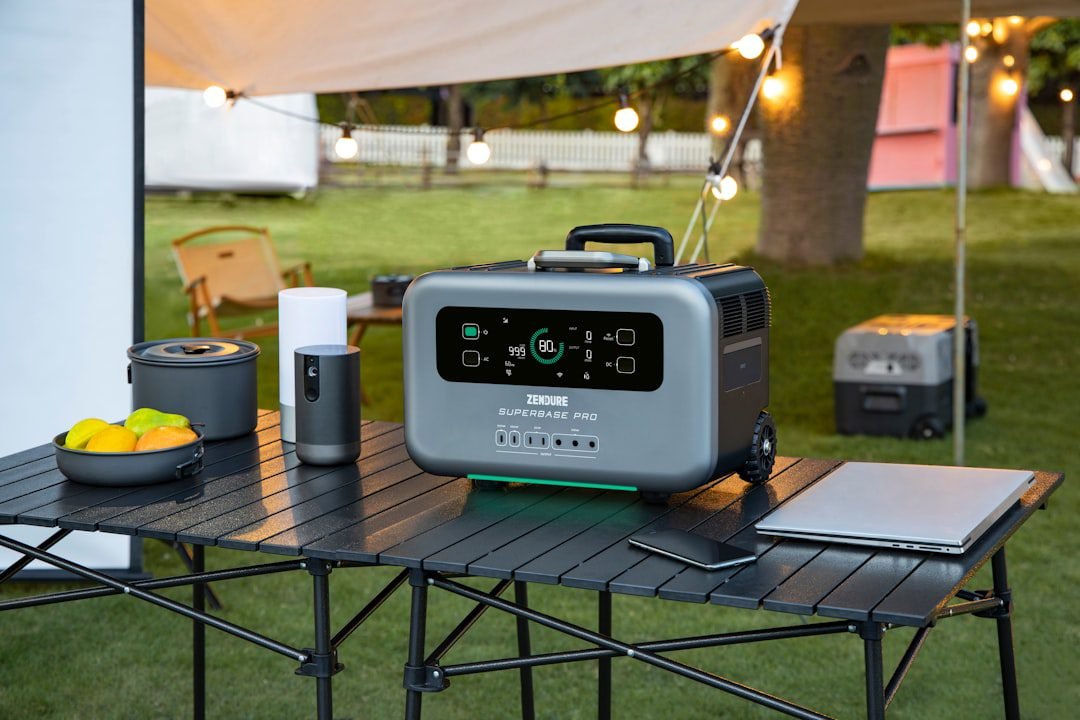
A generator burns fuel, typically gasoline or propane, to spin a motor that produces electricity on demand, for as long as you keep feeding it fuel. A portable power station is a large rechargeable battery pack that stores electricity in advance and releases it through AC outlets, USB ports, and sometimes a car-style socket, with no combustion involved at all.
Power Output and Runtime, Realistically
For essential home backup — lights, a fridge, phone charging, a modem and router, a few small appliances — a generator in the 3,000 to 5,000-watt range covers most households, with 7,500 watts or more needed if you’re running central air conditioning or a well pump. A portable power station’s runtime is fixed by its battery capacity, measured in watt-hours: a 1,500Wh unit running a 60-watt load, like a router and a few lamps, lasts roughly 25 hours, but the same battery running a 500-watt load is emptied in a few hours. Many power stations now accept solar panel input as a backup recharge method — a 200-watt panel in good sun can add roughly 200 to 800 watt-hours a day, which won’t replace a generator’s continuous output but can meaningfully extend a power station through a multi-day outage.
The Real Cost Picture
Portable power stations cost more upfront per watt of capacity than gas generators — a home-backup-capable power station in the 1,500 to 2,000Wh range typically runs $1,000 to $2,000, while a comparable mid-size inverter generator often lands somewhat lower for equivalent peak output. But the generator’s true cost doesn’t stop at the purchase: expect to budget for fuel (roughly $15 to $40 for a multi-day outage at moderate load, though this varies significantly by model and how much you actually run it), plus ongoing maintenance — oil changes, fuel stabilizer, occasional spark plugs — that a well-maintained unit needs regularly to start reliably when you actually need it. A power station has essentially no marginal cost per outage beyond the electricity to recharge it, but it also can’t be “topped up” mid-outage the way you can simply pour in more gasoline.
Noise: Not a Close Comparison
A portable power station is silent — there’s no motor. Even the quietest inverter generators run in the range of roughly 48 to 57 decibels at a distance, comparable to a loud conversation, and cheaper open-frame generators can exceed 70 decibels, loud enough to violate the noise limits many campgrounds and residential ordinances enforce. If a generator needs to run overnight for days during an extended outage, that noise is a real quality-of-life factor for you and your neighbors, not just a spec on paper.
Maintenance: The Ongoing Commitment
A generator needs real, recurring upkeep to be dependable when you actually need it: gasoline rotated or treated every few months so it doesn’t degrade in the tank, oil changed on a regular schedule, and the carburetor periodically cleaned or winterized. Skip this, and the classic failure mode is a generator that won’t start during the exact emergency it was bought for. A power station has essentially none of this — no fuel to store or rotate, no engine to maintain — though its lithium battery does have a finite lifespan, typically rated around 3,000 charge cycles, or roughly 8 to 10 years of regular use, before capacity noticeably declines.
Who Should Buy a Generator
- You regularly lose power for two or more consecutive days and need to run major appliances like central air, a well pump, or an electric water heater.
- You have safe, genuinely outdoor space to run it at least 20 feet from your home, every time, without exception.
- You’re willing to commit to the ongoing fuel and maintenance routine a generator requires to start reliably.
Who Should Buy a Portable Power Station
- Your outages are typically short, or your critical needs are limited to lights, devices, a router, and a fridge.
- You want zero-maintenance backup power that’s safe to keep charged and ready indoors.
- You don’t have safe outdoor space to run a generator, or you live somewhere close to neighbors where noise and fumes are a real concern.
Pros and Cons at a Glance
| Pros | Cons | |
|---|---|---|
| Gas generator | Unlimited runtime with available fuel; handles high-draw appliances; often cheaper upfront per watt | Real carbon monoxide risk if misused; loud; requires ongoing fuel storage and maintenance; must run outdoors only |
| Portable power station | Silent; zero emissions, safe indoors; no maintenance; solar-rechargeable | Limited by fixed battery capacity; can’t sustain high loads for long; higher upfront cost per watt; battery degrades over years |
Frequently Asked Questions
Can a portable power station replace a generator entirely for home backup?
For short outages covering lights, devices, and a fridge, often yes. For extended outages requiring major appliances like central air or a well pump, most power stations don’t have the sustained capacity a generator provides, so it depends heavily on what you actually need to keep running.
Is it ever safe to run a generator in a garage with the door open?
No. CPSC guidance is explicit that generators should never run in a garage, basement, shed, or other enclosed space, even with doors or windows open, since carbon monoxide can still build up to dangerous levels.
How many people actually die from generator-related carbon monoxide poisoning?
According to the CPSC’s most recent data, an average of about 100 people die each year in the U.S. from CO poisoning linked to portable generators, with the large majority of incidents occurring when the generator was running in an enclosed space.
What size generator do I actually need?
For essential backup covering lights, a fridge, and small appliances, 3,000 to 5,000 watts covers most households. If you need to run central air conditioning or a well pump, plan for 7,500 watts or higher.
Can I charge a portable power station with solar panels?
Most current models accept solar input. A 200-watt panel in good sunlight can add roughly 200 to 800 watt-hours per day, which can meaningfully extend a power station’s runtime during a multi-day outage, though it charges more slowly than a wall outlet.
Which one is actually cheaper over time?
It depends on how often you use it. A generator often costs less upfront but adds ongoing fuel and maintenance expenses with every use. A power station costs more initially but has minimal cost per outage, though its battery eventually needs replacing after years of regular cycling.
Final Verdict
A generator’s biggest strength is raw, sustained power — it can genuinely keep a house running through an extended outage in a way a battery-based device can’t. Its biggest weakness is the real, well-documented safety risk it carries when placed incorrectly, along with the ongoing maintenance commitment required to make sure it actually starts when you need it. A portable power station’s biggest strength is that it removes both of those problems entirely — safe, silent, and maintenance-free — at the cost of real limits on how much power it can deliver and for how long.
Choose a generator if your outages are long and your power needs are serious, and commit fully to using it outdoors every time, no exceptions. Choose a portable power station if your needs are more modest, or if the maintenance and safety burden of a generator isn’t something you want to manage. Many households facing frequent, extended outages end up genuinely served by both — a generator for the days-long events, and a power station for shorter gaps and the moments in between when running a full generator isn’t worth the fuel or the noise.