
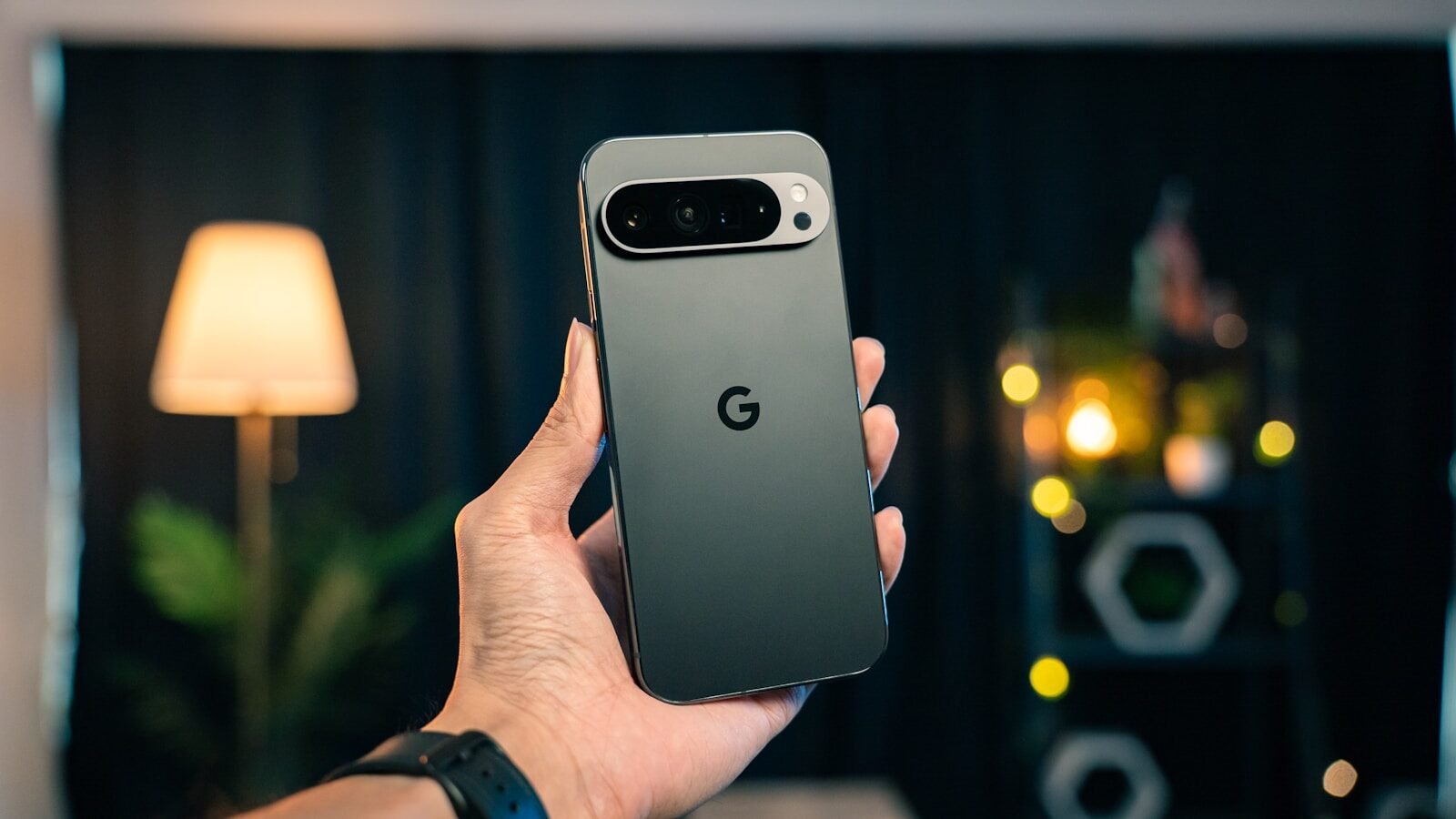
The Google Pixel 6 Pro remains an impressive camera-focused Android phone, but its age matters much more in 2026 than it did when it launched.
Released in October 2021, the Pixel 6 Pro introduced Google’s Tensor processor, a 6.7-inch QHD+ 120Hz LTPO OLED display, 12GB of RAM, a 5,003mAh typical battery, and a much more ambitious camera system than previous Pixel generations. Google originally positioned it as a premium flagship starting at $899.
Its strongest reasons to buy today are still familiar: excellent camera hardware, Google’s photography software, a high-quality display, clean Android software, and a distinctive design.
The problem is timing. Google currently lists the Pixel 6 Pro among devices receiving five years of updates from their original availability on the Google Store in the U.S. The Pixel 6 Pro became available in October 2021, which puts the end of its promised support window in late 2026.
That makes the Pixel 6 Pro a very different proposition today. A cheap, well-maintained used unit can still be interesting for photography enthusiasts, but paying a premium for one makes considerably less sense when newer phones offer longer software support.
Our verdict: The Pixel 6 Pro is still capable hardware, particularly for photography and display quality, but its short remaining official support window makes it difficult to recommend as a long-term primary phone in 2026.
Table of Contents
- What is the Google Pixel 6 Pro?
- Pixel 6 Pro specifications
- Design and build quality
- Display
- Tensor performance
- Camera performance
- Battery and charging
- Software and updates
- Everyday usability
- Pixel 6 Pro vs Pixel 6
- Pros and cons
- Is the Pixel 6 Pro worth buying in 2026?
- Who should buy it?
- Who should avoid it?
- Alternatives to consider
- Frequently asked questions
- Final verdict
What Is the Google Pixel 6 Pro?
The Pixel 6 Pro was Google’s 2021 flagship smartphone and the more expensive member of the Pixel 6 family.
It was significant because Google moved beyond simply competing through camera software and introduced its own Google Tensor system-on-chip. Tensor was designed around Google’s machine-learning capabilities and enabled features such as Magic Eraser, improved voice typing, Live Translate and other AI-assisted functions.
The Pro model also separated itself from the regular Pixel 6 with a larger and higher-resolution display, 12GB of RAM, and a dedicated telephoto camera.
At launch, the Pixel 6 Pro started at $899 in the United States, while the regular Pixel 6 started at $599.
That pricing was important. Google was no longer presenting the Pixel as simply a cheaper alternative to flagship phones; the Pixel 6 Pro was intended to compete directly in the premium category.
Google Pixel 6 Pro Specifications
| Feature | Google Pixel 6 Pro |
|---|---|
| Launch | 2021 |
| Operating system at launch | Android 12 |
| Processor | Google Tensor |
| RAM | 12GB LPDDR5 |
| Storage | 128GB / 256GB / 512GB, depending on market |
| Display | 6.7-inch QHD+ LTPO OLED |
| Resolution | 1440 × 3120 |
| Refresh rate | Up to 120Hz |
| Typical battery capacity | 5,003mAh |
| Main camera | 50MP |
| Ultrawide | 12MP |
| Telephoto | 48MP, 4x optical zoom |
| Front camera | 11.1MP |
| Video | Up to 4K at 60fps from rear cameras |
| Water resistance | IP68 |
| Weight | 210g |
Google’s official specifications confirm the 6.7-inch QHD+ LTPO OLED display, 12GB RAM, Google Tensor processor, 5,003mAh typical battery, IP68 rating and three-camera rear system.
One important distinction for today’s buyers is that these are original hardware specifications, not an indication that the phone remains current by 2026 standards.
Design and Build Quality
The Pixel 6 Pro was one of Google’s biggest design departures.
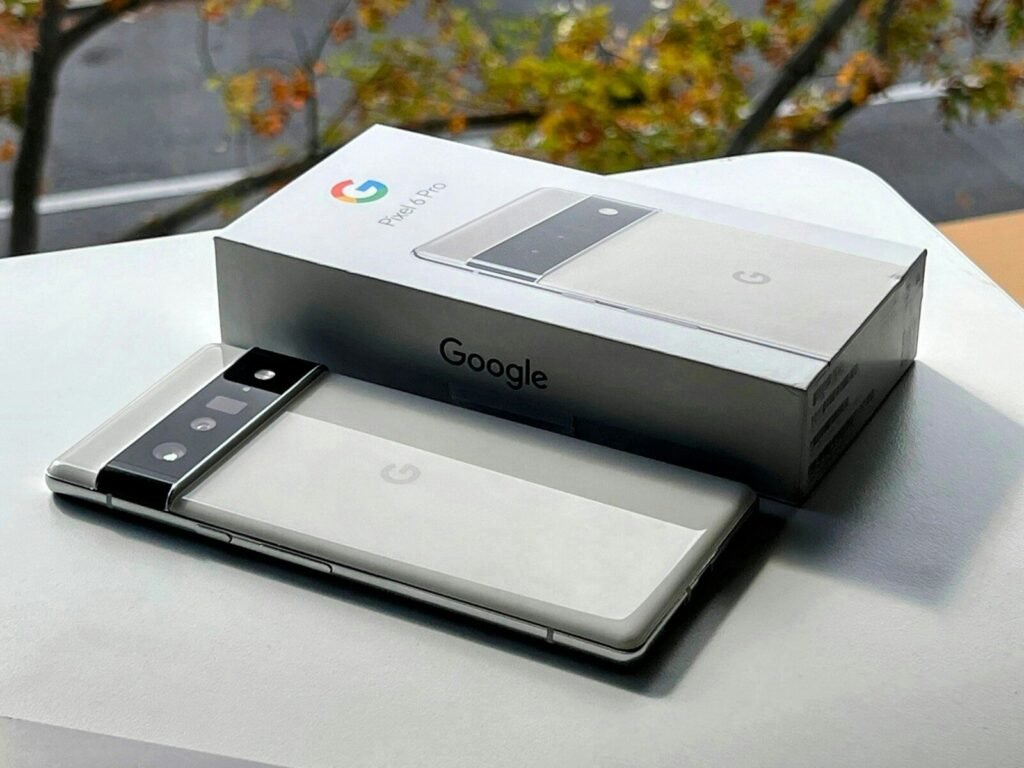
Its most recognizable feature is the horizontal camera bar across the rear. Instead of trying to hide the cameras inside a small rectangular module, Google made the camera system part of the phone’s identity.
The phone uses a polished alloy frame and Gorilla Glass Victus on the front and rear, with an IP68 rating for dust and water resistance when new. Google also lists a weight of 210 grams.
The design still looks distinctive. That’s useful for a phone that is now several generations old: the Pixel 6 Pro does not immediately look like a generic 2021 Android handset.
There is, however, a practical downside to the design. The 6.7-inch display and 210-gram body make this a large phone. Anyone who prefers compact devices may find the Pixel 6 Pro unnecessarily substantial.
The curved display edges also make it less conventional than a flat-screen phone.
Design verdict
Strengths:
- Distinctive camera-bar design
- Premium materials
- Gorilla Glass Victus
- IP68 water and dust resistance
- Still visually recognizable
Weaknesses:
- Large and relatively heavy
- Curved display is not everyone’s preference
- Used devices may have accumulated wear that cannot be judged from specifications alone
The 6.7-Inch Display Is Still One of Its Best Features
The Pixel 6 Pro’s display was flagship-grade when it launched, and the basic hardware remains impressive.
It has a 6.7-inch QHD+ LTPO OLED panel with a resolution of 1440 × 3120 and a refresh rate of up to 120Hz. Google’s specifications list a pixel density of 512 pixels per inch.
The LTPO technology allows the refresh rate to vary rather than staying permanently at 120Hz. That can help balance smoothness and power consumption.
For everyday activities such as scrolling through websites, viewing photographs, watching video and reading text, the high-resolution OLED panel remains a major advantage.
The bigger question is not whether the display is good. It is whether the rest of the phone justifies buying an older device specifically to get it.
For someone buying a used Pixel 6 Pro at the right price, the answer can still be yes. For someone paying close to newer-phone money, the calculation changes.
Google Tensor: Capable, But Don’t Buy It as a Gaming Flagship
The Pixel 6 Pro introduced Google’s first Tensor processor in a smartphone.
Tensor’s importance was not simply raw benchmark performance. Google designed it around machine learning and software features, allowing the company to connect hardware and software more tightly. Features such as Magic Eraser, voice typing, Live Translate and other computational functions were central to the Pixel 6 generation’s identity.
That strategy still explains why the Pixel 6 Pro can feel different from many Android phones.
However, there is an important distinction between AI-focused processing and being the best gaming phone.
Contemporary reviews found the Tensor-powered Pixel 6 series to offer strong everyday performance but noted that it was not necessarily the strongest choice for demanding gaming compared with phones using leading Snapdragon hardware of the same period.
In 2026, that gap matters even more because Tensor is now several generations old.
Performance verdict
For:
- Social media
- Web browsing
- Photography
- Streaming
- Navigation
- Communication
- Normal multitasking
…the Pixel 6 Pro remains capable.
For:
- Heavy gaming
- Buying primarily for maximum benchmark performance
- Keeping the phone for many more years
…it is much harder to justify.
Camera: The Pixel 6 Pro’s Biggest Reason to Exist
Photography is where the Pixel 6 Pro still makes the strongest case for itself.
Google introduced a substantially upgraded camera platform with the Pixel 6 generation. The main camera uses a 50MP sensor, while the Pro adds a 12MP ultrawide and a 48MP telephoto camera with 4x optical zoom.
That telephoto camera is one of the clearest differences between the Pixel 6 Pro and the regular Pixel 6.
Google also built software features around computational photography. Magic Eraser, for example, was introduced with the Pixel 6 generation as a way to remove unwanted people and objects from photographs.
Independent reviews at launch were particularly positive about the camera system. TechRadar described the combination of the 50MP main camera, 12MP ultrawide and 48MP telephoto as a major improvement in versatility, while The Guardian highlighted the camera as one of the phone’s strongest attributes.
That does not mean every newer phone will take worse photographs. Smartphone cameras have advanced substantially since 2021.
The more useful conclusion is this:
The Pixel 6 Pro remains attractive if photography is a priority and the purchase price is low enough to compensate for its age.
Why the telephoto camera matters
The regular Pixel 6 did not offer the same dedicated 4x optical telephoto system.
For portraits, distant subjects, travel photography and situations where you do not want to physically move closer, the Pro’s additional camera gives it more flexibility.
This is arguably the most meaningful reason to choose the Pro rather than the standard Pixel 6.
Battery Life and Charging
Google fitted the Pixel 6 Pro with a typical 5,003mAh battery and advertised more than 24 hours of battery life, with up to 48 hours possible using Extreme Battery Saver.
Those are Google’s claims under specified conditions, not a guarantee of a particular user’s screen-on time.
Independent launch reviews generally regarded battery life as reasonable or good, although charging speed was criticized as less impressive than some competing flagships. The Guardian specifically listed fairly slow charging among the phone’s weaknesses.
In 2026, however, there is another issue that matters more than the original battery specification:
Battery age
A Pixel 6 Pro bought today may have been used for several years.
Battery capacity naturally declines with use. Therefore, two used Pixel 6 Pro phones with identical specifications can provide very different battery experiences depending on their history and battery condition.
This is one of the most important things to check when buying a used unit.
Software Support Is Now the Biggest Concern
This is the section potential 2026 buyers should pay the most attention to.
Google currently says the Pixel 6 Pro receives five years of Pixel updates, counted from when the phone first became available on the Google Store in the United States. Google’s availability table places the Pixel 6 Pro in October 2021.
That means the phone is approaching the end of its official support period in 2026.
This changes the buying decision substantially.
A phone can remain physically useful after software support ends. Your apps do not suddenly stop working on a specific day. But the absence of future security updates becomes increasingly important for a device intended to handle personal communications, accounts, payments and other sensitive information.
Google’s August 2026 Pixel security bulletin confirms that supported Pixel devices were receiving the August 2026 security update.
So the Pixel 6 Pro is not simply an abandoned phone today. But it is near the end of its promised update life, which is very different from buying a newer Pixel with a much longer support runway.
This is the Pixel 6 Pro’s biggest 2026 weakness
The hardware may still satisfy you.
The support timeline is what makes a long-term purchase difficult.
Pixel 6 Pro vs Pixel 6
The regular Pixel 6 is worth considering because the two phones share the same Tensor platform and broad software experience.
The Pro’s major hardware advantages include:
| Feature | Pixel 6 Pro | Pixel 6 |
|---|---|---|
| Display | 6.7-inch QHD+ | 6.4-inch FHD+ |
| Refresh rate | Up to 120Hz | Up to 90Hz |
| RAM | 12GB | 8GB |
| Telephoto | Yes, 4x optical | No |
| Battery | 5,003mAh typical | 4,614mAh typical |
| Target | Premium flagship | More value-focused |
The Pixel 6 Pro therefore makes more sense for someone who specifically wants the better display, more RAM and telephoto camera.
If those features are not important, the regular Pixel 6 can provide much of the same basic Pixel experience for less money on the used market.
Pros and Cons of the Google Pixel 6 Pro
Pros
- Excellent camera hardware for its generation
- Dedicated 4x optical telephoto camera
- High-resolution 120Hz LTPO OLED display
- 12GB RAM
- Distinctive premium design
- Google Tensor enables useful computational photography and AI features
- IP68 rating
- Wireless charging
- Strong Pixel software experience
- Still capable for ordinary everyday use
Cons
- Large and heavy
- Older Tensor processor
- Charging is not especially fast by modern flagship standards
- Under-display fingerprint reader received criticism in contemporary reviews
- No face unlock at launch
- Battery condition is a major concern when buying used
- Official software-support window is close to ending
- Newer phones offer much longer support periods
- Not the best choice for buyers seeking maximum gaming performance
Contemporary reviews also criticized the fingerprint reader and the absence of face unlock, while praising the camera, display and overall Pixel software experience.
Is the Google Pixel 6 Pro Worth Buying in 2026?
It depends almost entirely on the price and your priorities.
If you are buying a Pixel 6 Pro because you want a relatively inexpensive phone with a strong camera, excellent display and distinctive design, it can still be interesting.
If you are buying it because you expect a premium phone that will remain fully supported for several more years, it is difficult to recommend.
The five-year support promise means the phone is near the end of its official update period.
That creates a simple decision rule:
Buy it if:
- You can get it significantly cheaper than a newer phone.
- Photography is one of your main priorities.
- You want the 4x telephoto camera.
- You prefer Google’s Android experience.
- You understand that official support is nearing its end.
- The specific used unit has a healthy battery and good physical condition.
Skip it if:
- You want 4–6 years of future software support.
- Security updates are especially important to you.
- You want the newest AI and camera capabilities.
- You are a serious mobile gamer.
- The seller is charging a price close to a newer supported phone.
- The battery has significant degradation.
What Should You Check Before Buying a Used Pixel 6 Pro?
This is more important than simply checking the RAM and storage.
1. Check the exact model
Different regional versions can have different network configurations. Google lists different 5G configurations and model variants, so buyers importing the phone should verify compatibility with their local carrier.
2. Inspect the display
Look for:
- Cracks
- Burn-in
- Dead pixels
- Touch problems
- Excessive scratches
- Damage around the curved edges
3. Check the cameras
Test:
- Main camera
- Ultrawide
- 4x telephoto
- Autofocus
- Video recording
- Front camera
4. Check the battery
Do not assume a 5,003mAh specification means the used phone still has that original capacity.
Battery condition depends on how the particular device was used.
5. Verify software status
Open the software-update section and check the current Android version and security patch level.
Google provides the update status through Settings → System → Software update.
6. Check water-damage history
IP68 is not a guarantee that a used phone remains waterproof. Google explicitly warns that water resistance can diminish through wear, damage, repairs and disassembly.
What Are the Best Alternatives?
The most sensible alternative is generally a newer Pixel or another recent Android flagship, rather than paying a high price for an aging Pixel 6 Pro.
The reason is not that the Pixel 6 Pro suddenly became a bad phone. Its camera, display and hardware remain respectable.
The problem is opportunity cost.
If the price difference between a Pixel 6 Pro and a newer supported phone is small, the newer device can offer a much longer software-support runway and newer hardware.
For buyers who specifically want a Pixel, moving to a newer generation is therefore the safer long-term decision.
For buyers on a strict budget, the Pixel 6 Pro becomes more interesting if a clean used unit is available at a substantial discount.
Frequently Asked Questions
Is the Google Pixel 6 Pro still good in 2026?
Yes, the hardware is still capable for normal smartphone use, and its camera system and display remain major strengths. However, its official software-support period is approaching its end, which is the biggest reason not to treat it like a current flagship.
Does the Pixel 6 Pro have a 120Hz display?
Yes. It has a 6.7-inch QHD+ LTPO OLED display with a refresh rate of up to 120Hz.
How good is the Pixel 6 Pro camera?
The camera system was one of the phone’s strongest features. It has a 50MP main camera, 12MP ultrawide and 48MP 4x optical telephoto camera. Independent reviews praised its photography capabilities when it launched.
Does the Pixel 6 Pro have a telephoto camera?
Yes. The Pro model has a 48MP telephoto camera with 4x optical zoom and Google’s Super Res Zoom technology.
How much RAM does the Pixel 6 Pro have?
The Pixel 6 Pro has 12GB of LPDDR5 RAM.
Does the Pixel 6 Pro have water resistance?
Yes. Google designed the Pixel 6 Pro with an IP68 dust and water-resistance rating. However, Google warns that water resistance is not permanent and can diminish with wear, damage or repairs.
How long will Google support the Pixel 6 Pro?
Google lists the Pixel 6 Pro for five years of updates starting from its original availability on the Google Store in the U.S. The availability table lists the Pixel 6 Pro in October 2021, so buyers in 2026 should regard the phone as being near the end of its official support period.
Should You Buy the Pixel 6 Pro?
The Google Pixel 6 Pro was an important phone for Google.
It introduced the Tensor platform, dramatically changed Pixel’s hardware design, upgraded the cameras and finally gave Google’s flagship a display and feature set capable of competing directly with other premium smartphones. Contemporary reviews praised the camera, display, software and overall experience while identifying weaknesses such as the fingerprint reader and charging speed.
Several years later, its strengths have not disappeared.
The camera remains the biggest reason to consider it. The 4x telephoto lens, capable main camera and Google’s computational photography approach give the phone a useful imaging setup. The QHD+ 120Hz display is another feature that has aged well.
But the most important fact for a 2026 buyer is not a camera specification.
It is software support.
Google’s five-year update policy for the Pixel 6 Pro means its official support window is now close to completion.
That makes the Pixel 6 Pro a good used-phone opportunity only when the price reflects its age.
If you find a well-maintained unit cheaply and primarily want photography, the display and Pixel experience, it can still be a compelling purchase.
If you want a phone to keep for years, want long-term security updates, or would have to pay a substantial amount for it, choose a newer device instead.
The Pixel 6 Pro is not obsolete. It is simply old enough that price and remaining support matter more than its impressive original specifications.
Author Bio
TrendCritique Editorial Team
TrendCritique’s editorial content is researched and written according to the site’s independent editorial standards, with emphasis on accuracy, useful analysis, transparent limitations and reader-focused decision-making.