
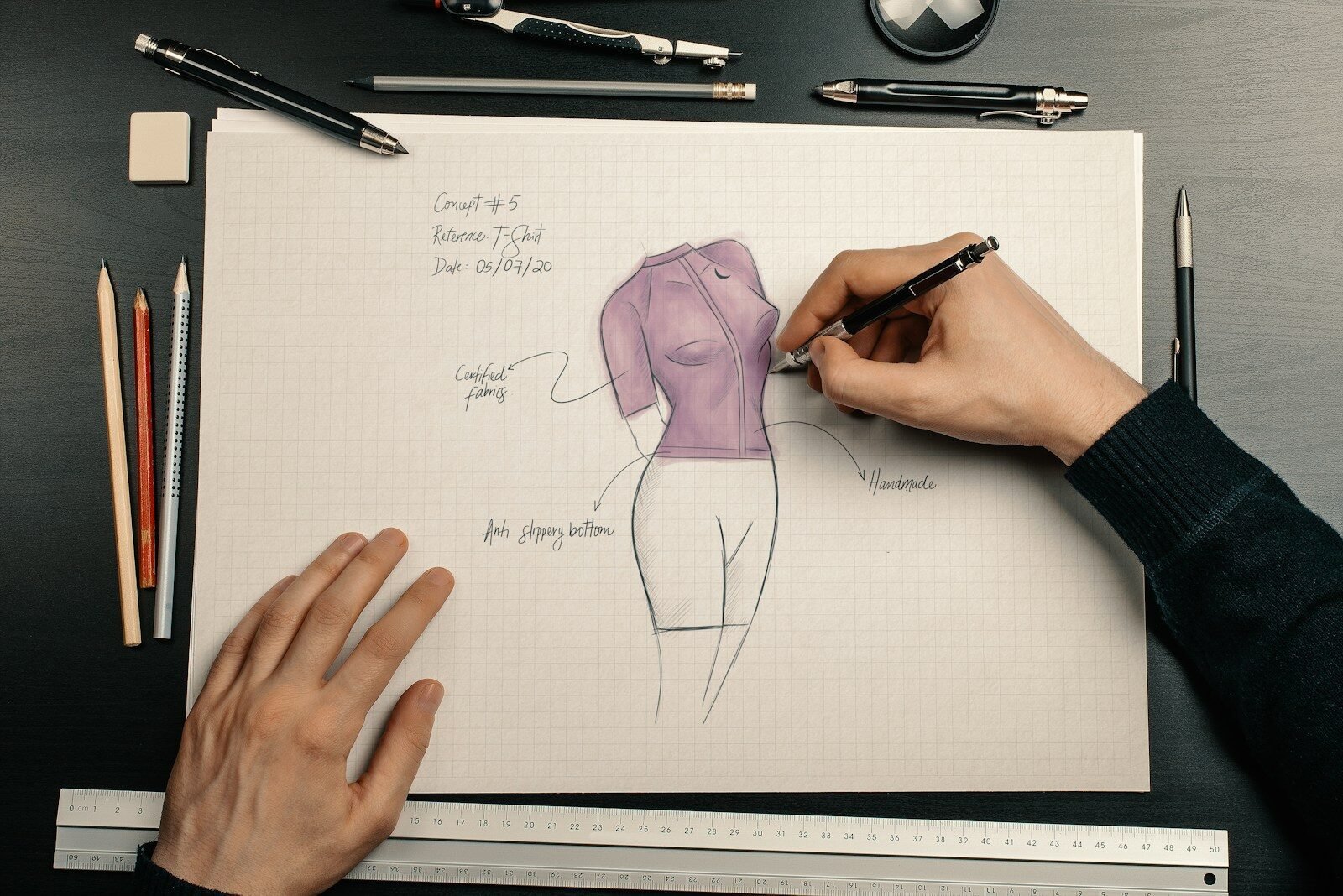
Fashion design is an iterative process. A designer may spend time exploring options, comparing fabric swatches, sketching shapes, discussing color, and presenting a concept before a sample garment is even produced. AI fashion design tools expedite this process by using text, reference imagery, and early concepts to generate an image for a designer to iterate on.
In 2026, designers can use these tools to develop concepts, test styles, build mood boards, generate imagery, and design a virtual garment. The image of a dress may be lovely, but it does not always indicate a dress that can be produced with the right construction and silhouette.
For brands, independent designers, and clothing companies, an opportunity is emerging to determine where AI-generated imagery can be useful in their design process, and where human expertise may be better suited to the task.
What Is AI Fashion Design?
AI fashion design tools utilize artificial intelligence to aid in the research, development, presentation, or production of clothing. Depending on the program, a designer can enter a request, upload sketches or reference images, or edit an existing garment.
The software will generate or modify these prompts into images or designs based on the request. More comprehensive programs allow a designer to construct a garment virtually, utilizing patterns and material samples.
A designer may request a ‘lightweight summer jacket with an oversized fit, made of upcycled fabric, with hidden pockets and a neutral olive tone.’ An image prompt generator may yield several options fitting this description, allowing the designer to refine the request until a preferable concept emerges.
AI fashion design typically falls into three categories: ideation, product development, and presentation. These categories often overlap, but are distinct in their approach to fashion design.
- Ideation: Silhouettes, colors, patterns, and other visual design elements
- Product development: Construction details, pattern-making, and garment fit
- Presentation: Imagery for marketing and campaigns, lookbooks, and stylist collaboration
Different tools serve these categories, but all provide a means for designers to engage with computer-generated design assistance, and determine the value of these early concepts in their design workflow.
Why AI Fashion Design Tools Are Captivating The Industry in 2026
An indicator of an industry’s intrigue with a concept is its ability to attract searches and publicity. Accio’s AI fashion trends report analyzes search trends and reports on the rising interest in AI design tools across the industry. Their research indicates that the phrase ‘AI fashion design’ peaked in March 2026 within their data set
A small clothing label may not have the resources to photograph a capsule collection for marketing, but can utilize generated images to explore options before approving a photoshoot. A designer without illustration skills may be able to dictate and reference an image to an AI design prompt, rather than sketching a concept.
Larger labels may wish to test a digital-first clothing line to reduce the resources spent on samples. The tool fits into a broader cultural shift towards exploring digital development, and Vogue’s fashion tech round-up for 2025 indicates that the industry is interested in AI imagery and virtual try-ons, as well as the broader design offerings from developers. Beyond the appeal of an eye-catching image, these programs offer the opportunity for teams to collaborate on early visual concepts, or determine fit and construction before physical samples are needed. In essence, the tool can reduce the resources spent on an early prototype.
How Fashion Brands Are Using AI Design Tools
1. Exploring new clothing concepts
The most obvious applications for AI fashion design tools are also the simplest: generating an image from a request.
A designer can utilize an image prompt generator to yield multiple options for a garment, such as hoodies, evening dresses, bags, and other accessories, without having to sketch or illustrate each item.
This is useful not only for a solo designer working on a concept, but also for a designer working in tandem with others to determine a shared vision. Rather than asking for a designer’s opinion on a concept described in text, a designer can share a visual mock-up and request feedback.
2. Creating mood boards and collection direction
Collections require cohesion: a designer must consider not only the garments fitting together, but also the visual presentation suggesting a shared theme, texture, color palette, and other elements. AI-generated design concepts can aid a designer in finding this direction. A designer working on a winter collection may wish to compare three approaches to the season: minimalist tailoring, utilitarian staples, or oversized knits in warm tones. The designer can then determine which approach fits their customer base and brand requirements.
This is most useful when the designer has provided a comprehensive brief to the AI design tool: the more information that the prompt includes on the designer’s requirements, the more relevant the imagery will be. A designer should be specific on their requirements, such as fitting criteria and material options, as well as their general requirements, such as the target customer and season. If the prompt is vague, or if the tool does not have access to relevant training data, the visual concepts may be impressive, but unrealistic.
3. Visualizing garment details before sampling
More comprehensive digital fashion design tools enable a designer to visualize a garment in greater detail before sampling begins.
CLO enables a designer to construct a 3D garment, testing out the design elements. While this tool can yield beautiful imagery of a dress on a digital mannequin, more advanced tools such as this enable a designer to integrate patterns and fabric weight, enabling a greater understanding of the garment’s construction. This is a useful counterpoint to image prompt generators, as this tools offers a closer approximation to pattern-making and garment construction. The designer will still need to review the garment for fit and construction, but this tool enables a proof of concept that can reduce the resources spent on sampling.
A designer may be captivated by a visual concept, but it is one thing to view a garment on a screen, and another to determine how this garment fits, or how the weight of the material impacts the drape. Virtual sampling enables a designer to troubleshoot early concepts, but it is not a substitute for physical sampling.
4. Producing marketing and e-commerce imagery
A brand’s marketing and e-commerce presence is crucial to a label’s success, and AI design can aid designers in determining a visual direction for their campaigns or e-commerce listings. For example, Adobe Firefly’s clothing design tools enable a user to prompt, generate, compare, and visualize garment imagery using referenced images. For a small label, this can be a useful tool when working out a marketing campaign or early product photography concepts for a seasonal release. The designer can experiment with this tool to visualize a product listing image before approving a photoshoot for production.
A caution with marketing imagery is to remember that the image should not suggest features that cannot be delivered on a manufactured garment. If an AI image generator yields an image of a jacket with a pocket that is not present on the manufactured jacket, customers may be dissatisfied with the product listing image. This tool is useful when a designer wishes to experiment with marketing concepts, but the end image should suggest the characteristics of the actual garment.
5. Supporting personal styling and virtual try-ons
AI is also being utilized to visualize garments on bodies, supporting personal styling and outfit creation concepts. For a retailer, these tools can enable greater engagement with their customers, or support their shoppers with try-on services. Vogue’s fashion tech round-up for 2025 spotlights virtual try-ons and AI-assisted shopping as an emerging trend for 2026. The appeal for a retailer is to engage with their customer base, and to support them with shopping recommendations. An image of a customer in an outfit is useful, but outfit planning is not a substitute for fit technology or accurate size recommendations. Body types, garment construction and materials, sizing inconsistencies, and other factors will dictate the usefulness of a visually generated try-on image. For a brand, it is important to note the difference between an AI-generated visual try-on, and a tool offering fitting technology and size recommendations.
AI Fashion Design Tools To Explore
There are a variety of tools which serve these purposes, with different strengths and weaknesses. These are a few useful options to consider, rather than an exhaustive list of clothing design programs:
| Fashion design tool | Best For | Notes |
Adobe Firefly | Clothing concepts, variations, and outfit imagery | Accessible, but not a pattern-making resource |
CLO | 3D garments, fabric visualization, and virtual sampling | Closer to pattern-making than image generation; requires learning and accurate data |
TrendHunter | Trends in design thinking, products, and customers | Useful for inspiration, but not a measurement of customers’ interests |
Accio’s AI fashion trends analysis | Interest in AI and fashion design-related searches | Take directional trends with a grain of salt; examine the data behind the summary |
Before utilizing these tools and programs, a designer should evaluate the licensing, commercial use, file format access, privacy restrictions, and other requirements. These terms can evolve, and it is important to review the conditions directly with a provider before utilizing the software to generate assets for a paying client, or for an official clothing collection.
Benefits of AI in Fashion Design
Speed is a designer’s ally. A designer can iterate on multiple concepts, determine the most compelling design, and utilize generated imagery to share with buyers or production teams. AI-generated concepts can also democratize early garment design: a designer with strong visual concepts but limited illustration skills can prompt a computer-generated image, or a small team can utilize image prompt generators to explore marketing concepts before approving a photoshoot. A visual concept can aid in collaboration across departments, enabling a designer to discuss silhouettes and colors with buyers and production managers. The combination with 3D garment design software can also reduce the resources spent on sampling, as a virtual garment can suggest fit and construction options before physical samples are produced. This can also reduce the environmental impact of sampling and production, by reducing the number of garments made at early stages.
The most important consideration for a fashion brand should always be the results: what they hope to achieve by integrating these tools into their workflow, and how they can measure the value of these changes.
A company can generate hundreds of garment images and find few that are viable for production. Several compelling concepts can reduce the resources spent on developing a new label, or aid in speeding up the early stages of garment development.
Limitations and Risks For Brands
Attractive images can hide physical flaws
An engaging image may mislead a designer: sleeves may be attached incorrectly, seams may be missing, and hardware may be absent.
A designer or technical expert must always review a computer-generated garment or image before approving the next stages of development.
Copyright and ownership concerns
AI-generated designs can raise concerns for brands, particularly around the utilization of protected works (trademarks, copyrights), or recognizable design elements in the generated garment or image. A designer must determine whether a tool’s output infringes on the copyright of an existing design, or utilizes the trademark of another label. Before utilizing an AI design tool for commercial use, a designer must review the terms of the service, and ensure that third-party content is not being utilized without permission. Keeping a record of prompts, referenced assets, and alterations to a generated garment are all essential practices, particularly for commercial work.
Brands risk becoming generic
A quick search for image inspiration may yield similar results to other designers utilizing these tools. If a designer utilizes a tool to dictate the direction of their work, their work may unintentionally align with the look of other labels utilizing the same tool. A strong design brief, unique references, and a discerning eye are essential in maintaining a brand’s unique creative direction. AI-generated concepts should enhance rather than dictate a designer’s originality.
A rising search trend is not a demand trend
An increase in searches for ‘AI fashion design’ suggests a growing interest in the concept, but a search spike is not an indicator that a customer will purchase a specific item or that a collection will gain commercial success. A brand must always consider their customers’ needs and preferences, as well as other market research, before utilizing these tools to dictate their design direction.
How To Add AI To A Fashion Design Workflow
A brand that wishes to experiment with these tools, without disrupting their production or design process, should begin with a focused test.
Consider the following steps for a pilot project:
- Determine a goal. A designer should focus on one area where they would benefit from faster iteration or compelling imagery. This could range from faster concept work to improved product photography.
- Create a strong design brief. This should note the requirements for a designer, including the target customer, garment type, and materials, as well as any budgetary constraints. The designer should also have a vision for this project, and what they hope to achieve by utilizing this tool.
- Explore a few concepts. Rather than dozens of generated visuals, a designer should work with a few compelling concepts which align with their requirements and vision. They should also note which prompts and reference images yield the most compelling results.
- Review concepts with a human designer. The designer should analyze the generated pieces for originality, visual appeal, construction viability, and fit with their requirements and vision. The most compelling concepts can then be sent to the appropriate production or pattern-making process.
- Test the value. A designer should determine what these changes have indicated for their label. Have they seen faster approval of early concepts? Reduced resources spent on sampling? Fewer design reworks?
- Define commercial use rules. The designer should set guidelines around which employees can add company assets to these programs, which programs are appropriate for commercial work, and how generated concepts should be reviewed before being sent to production.
This approach ensures that a brand is focusing on a specific need rather than searching for an immediate disruption to their production or design process. If the tool proves valuable, the label can integrate it into their broader process. If not, the disruption is minimal.
FAQs
Can AI design an entire clothing collection?
AI can generate concepts and imagery for an entire collection, but additional work is required before a designer can produce a finished, production-ready set. Designers must also consider materials, garment construction, production costs, and fit for the target customer.
Are AI fashion design tools suitable for beginners?
Yes. Image prompt tools are accessible to anyone with an interest in clothing design, while technical garment design programs tend to require more specialized knowledge of patterns, construction, and 3D garment-making.
Can AI fashion design reduce clothing waste?
It can reduce waste when working with digital design and visual sampling rather than physical samples at every stage. The impact will depend on the product and specific practices, but AI imagery alone is unlikely to lead to significantly more sustainable production.
Can a fashion brand use AI-generated designs commercially?
It depends on the tools’ licensing requirements, referenced materials, the uniqueness of the requested design, and local copyright laws. Always review the commercial-use terms of a service before publishing or manufacturing AI-assisted content.
Will AI replace fashion designers?
AI can automate or assist some elements of the design process, particularly visual elements, but fashion design requires cultural awareness, product expertise, and a strong creative eye. A more practical discussion is how designers can utilize these tools, and what tasks are most beneficial to delegate to an AI design tool.
Final Thoughts
AI fashion design tools are most useful when they fulfill a specific need for a designer, and act as an enabler for a specific action. Generating a new silhouette can help a designer flesh out their concept; visualizing a garment in 3D can help move product development along; and creating concepts for a marketing campaign can help a brand determine their visual direction for a collection. The tools are not a replacement for a designer’s expertise in garment construction, or their awareness of the target market. The most useful workflow involves the speed and accessibility of computer-generated concepts, and the experience of human design and production specialists.
For fashion brands considering these tools in 2026, the most useful approach is to determine one specific need before utilizing these tools.