
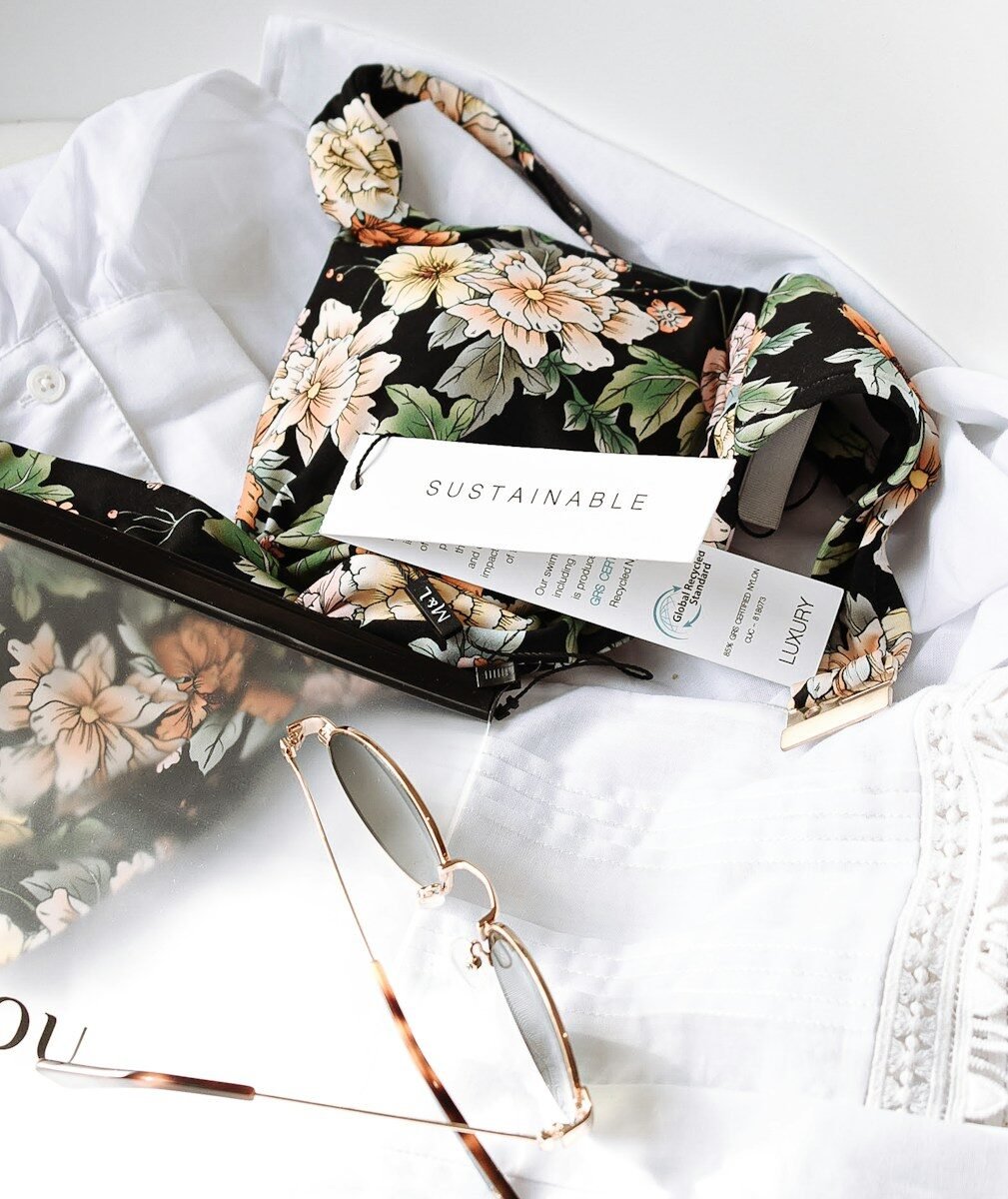
Sustainable fashion is a movement focussing on the responsibility in how clothes are manufactured, bought, worn and discarded. It is more than a consumer choice to buy organic cotton or a T-shirt made with recycled polyester. Where, how and for how long the garment is worn and what happens to it after its first owner are equally important.
Imagine buying two T-shirts. One is made with an eco-labelled material, but it only lasts a few washes before it wears out completely. The other is made with lower profile fabric, but fits well and can be worn for years. It may even be preferable to buying a number of similar short lived T-shirts.
That is the challenge of sustainable fashion – to reduce waste by looking at clothes from a wider perspective.
There are several trends, initiatives and regulations in 2026 that relate to sustainable fashion, including:
- slow fashion (concentrating on clothes that wear well and look good for long periods)
- circular fashion (keeping garments and fabric in use)
- ethical fashion (taking account of working conditions and how people are treated in the supply chain)
responsibly sourced materials (considering how fibre is produced. Its’ effect on the environment including chemicals used, durability, water consumption and other factors)
transparent fashion (providing trusted information about products).
Though overlapping, they are not the same, but rather different aspects to consider when shopping. A recycled garment can be poorly made, and a company can have a recycling scheme. But continue producing similar amounts of new garments overall.
A good place to start is looking closer at what the label doesn’t say, and understand the bigger picture.
Why sustainable fashion matters in 2026
As any human needs clothing, modern fashion promotes buying as many new items as possible. With as little thought to how long a garment will last. This causes waste throughout the garment’s life cycle.
From growing or manufacturing fibre to making the garment, energy, water, chemicals and other resources are used. Offcuts, transporting goods, energy and water used at retail, washing and drying at home and the eventual disposal in the garbage, incineration or other forms of waste management can all have an impact on the environment.
The UN Environment Programme’s work on sustainable and circular textiles highlights over-production, over-consumption, pollution and waste as issues for the fashion industry. These problems are not solved by changing what fabric label is on shirts, but rather changing practices throughout the supply chain. Similarly, authorities in the EU are taking notice of how clothes are designed, produced, promoted, bought and eventually thrown away. The European Commission’s Strategy for Sustainable and Circular Textiles proposes products are designed to be more durable, repaired, reused and recyclable, and produced more responsibly.
As a consumer, this means buying fewer clothes overall, buying garments that can be worn for longer, and finding ways to repair clothes or buy second-hand items if they become necessary.
While a single customer purchase will not solve the industry’s problems, collectively customers can promote a market that values more responsible production.
The sustainable fashion trends to watch out for in 2026
Sustainable fashion is a diverse mix of different consumer choices and government regulations. The following are trends to watch out for in 2026.
1. Second hand shopping is mainstream
Buying second hand allows the existing garment to be worn by someone else. Rather than discarded and a new similar garment immediately bought.
Second hand shopping can also allow the purchase of a style, quality or brand which would otherwise be unaffordable. Depending on local availability, second-hand garments can be found at thrift shops, vintage stores, online resellers, barter or clothing swaps.
However, second hand shopping is not always the best option. A damaged garment that no one else will buy, is little better than throwing an item straight in the rubbish bin. Alternatively, purchasing more just because the garments are cheaper promotes over-consumption. The best second hand shopping is based on what you need and want to be wearing.
Before buying, inspect a garment for damage and wear, and check photographs and measurements. The condition notes for an online purchase.
2. Circular fashion means keeping garments in use for longer
Circular fashion promotes repairing, re-selling, wearing, renting, take-back schemes and reprocessing fabric to extend the use of garments. It promote keeping clothing in use for as long as possible, and getting as much value from them as possible through repair, rental or upcycling.
A simple example of this is a jacket with a broken zip fastening. In a more traditional buy-wear-discard model, the fastening would be replaced, or the jacket discarded and a new one bought. A circular approach asks “can the fastening be fixed?” and “can this jacket still be worn for several more years?”
Repair services are crucial to helping a garment continue being worn. Similarly, a jacket bought in a good condition for repair, can be worn for many years to come by the next owner.
While recycling has its place, there are limitations. Fibres, dyes, coatings and trims on a garment can be difficult to identify and separate at recycling stages. In addition, recycling a garment into things such as insulation or cleaning rags is very different to recycling into a high quality piece of clothing with a similar design.
The UNEP report on transforming the textile industry highlights the need to move away from disposable garment production, and develop circular approaches such as product lifetime extension.
3. Durability is an indicator of value
A low purchase price is not always a good guide to value. Consider this scenario: a pair of trousers costing $20 that lasts six months, compared with a $ 60 pair that lasts for three years. If both are worn regularly, the second pair may offer a lower cost per month of use.
This is a simplistic analysis, but as a general rule well made garments last longer and therefore offer value.
Durability goes beyond the weight of a garment or how thick the fabric is. A durable garment will suit its purpose, wear well and not easily fray or pill. Good stitching, fastenings, buttons that can be replaced and clear washing instructions also improve the chances of a garment still being worn after a few years. Another aspect of durability is personal style. A garment that complements your existing wardrobe and can be worn for a variety of occasions, is likely to be worn more than a statement piece that only lasts a few weeks.
4. Brands are now more pressured to report what they actually do
Consumers are seeing terms such as “conscious”, “eco-friendly”, “planet positive”, or “responsibly made”. While these might be appealing. They often do not tell the consumer anything useful about what the company has actually done to improve its business practices.
A good example of reporting what a company has done is reporting a specific improvement, such as using a stated percentage of recycled fibre in a garment. A brand claiming “eco” or “conscious” might instead state what the fabric is made of, and what scope the claim has.
The difference between a label saying “sustainable garment X” and a label saying “some fabrics are partially recycled”, is one of proof versus marketing language. A garment made of recycled polyester may be a good step away from virgin polyester. But is little use if the garment still sheds large amounts of plastic, lasts a short time, and ultimately ends up in the waste stream.
In 2026, consumers should look to be more aware of what a label means, instead of trusting nature inspired marketing.
5. The digital product passport moves closer to retail
One of the most important regulatory developments in sustainable fashion is the Digital Product Passport – often shortened to DPP.
A Digital Product Passport is a digital record that aims to provide relevant product information to businesses, consumers, repairers, recyclers and regulators. Depending on the applicable regulations, a product passport can provide information on product identification and materials, traceability and repairability, and product environmental characteristics such as carbon footprint.
A product may provide its information via a QR code, or other data carrier. For example, a consumer could scan a code on a garment to see what fibre the garment is made of, or other details required by the applicable product regulation. A repairer or recycler could also have access to trusted information about the materials used in a given garment.
Textile apparel is one of the product groups prioritised by the EU’s Ecodesign for Sustainable Products Regulation. Regulation timelines are complex, but the European Commission’s indicative timetable foresees adoption of the textile specific delegated acts in the fourth quarter of 2027.
Requirements and implementation dates are subject to change, and at this point in 2026. It would be premature to say Digital Product Passports are a universal requirement for all garments. For updated information, refer to the Commission’s Digital Product Passport guidance for textile apparel.
The most important benefit is transparency, and a digital record can make it easier to compare product information. However, a QR code is little use in determining if a garment is environmentally responsible.