
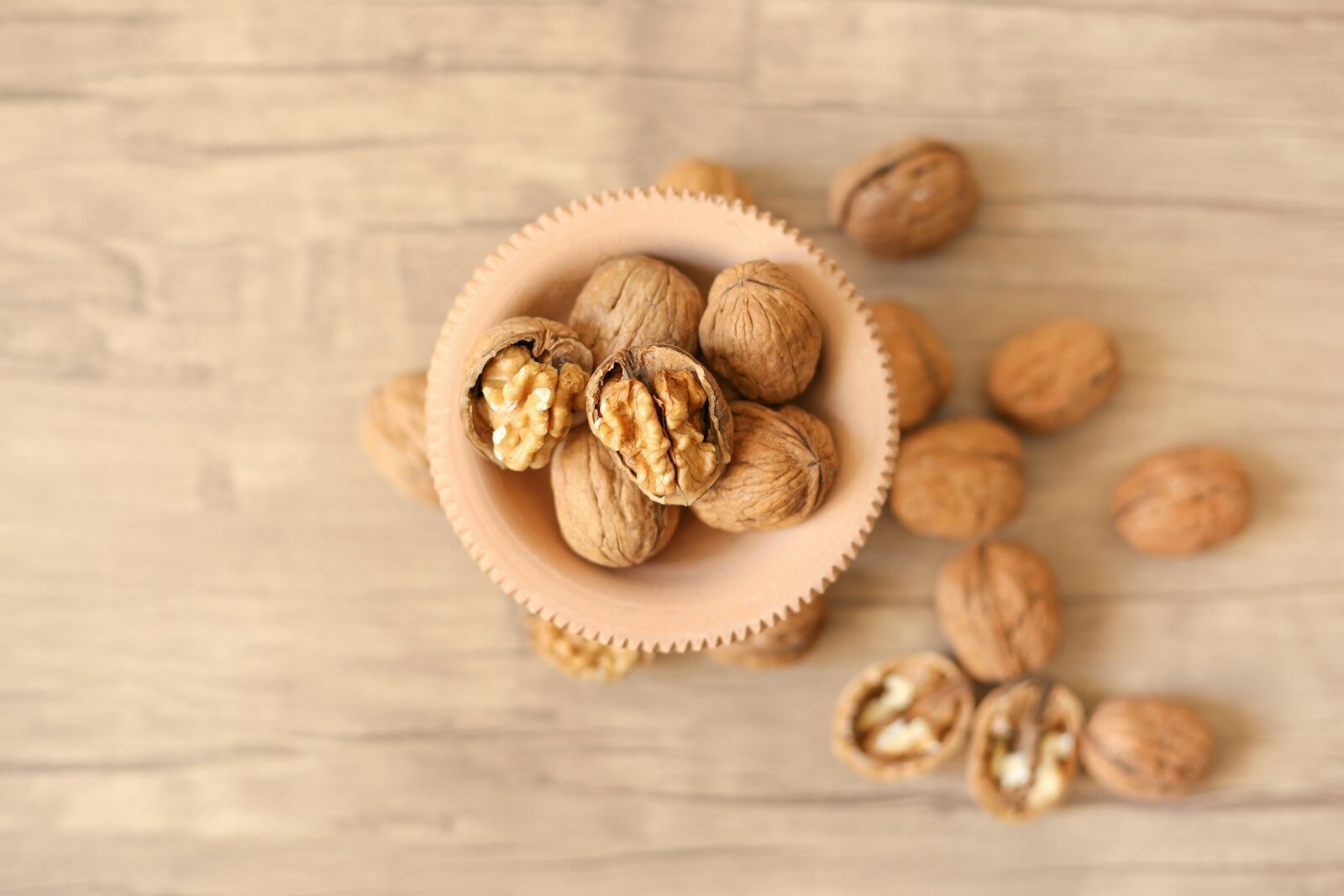
Raw walnuts are more than a convenient snack. They provide unsaturated fats, plant-based omega-3 fatty acid ALA, protein, fiber, minerals, and other bioactive compounds in a relatively small serving. Research on walnut consumption has particularly focused on cardiovascular health and blood cholesterol, while studies in areas such as cognitive health are still developing.
For most people, eating a moderate portion of raw walnuts can be a practical way to add nutrient-dense food to a balanced diet. But walnuts are also calorie-dense, so eating large quantities does not automatically provide more health benefits.
What Are the Benefits of Raw Walnuts?
The potential benefits of eating raw walnuts include:
- Providing plant-based omega-3 ALA
- Supplying predominantly unsaturated fats
- Supporting a heart-healthy dietary pattern
- Helping improve certain blood lipid measures
- Providing dietary fiber and plant protein
- Supplying minerals such as copper, manganese and magnesium
- Adding a filling, nutrient-dense food to meals and snacks
- Offering polyphenols and other plant compounds
The strongest evidence concerns blood lipid profiles and cardiovascular health. A systematic review of randomized controlled trials found consistent evidence that walnut-containing diets can improve several blood lipid measures, while research on cognition, blood glucose and other outcomes remains less conclusive.
Raw Walnuts Nutrition
A typical serving is about 1 ounce (28 grams), which is roughly a small handful. USDA FoodData Central is the underlying source for commonly cited nutrition data on raw English walnuts.
Approximate nutrition per 28-gram serving includes:
| Nutrient | Approximate amount |
|---|---|
| Calories | 183–185 kcal |
| Protein | 4.3 g |
| Total fat | 18–18.5 g |
| Carbohydrates | 3.8–3.9 g |
| Fiber | About 1.9 g |
| ALA omega-3 | About 2.5 g |
| Magnesium | About 45 mg |
| Copper | About 0.45 mg |
| Manganese | About 1 mg |
Values can vary slightly depending on the database entry, variety and preparation.
The important point is not simply that walnuts contain a lot of fat. Much of that fat is polyunsaturated fat, including alpha-linolenic acid (ALA), a plant-based omega-3 fatty acid.
1. Raw Walnuts Provide Plant-Based Omega-3 ALA
One of the most distinctive nutritional features of walnuts is their ALA content.
ALA is an essential fatty acid, meaning the body cannot produce enough of it on its own and it needs to come from food. Walnuts provide considerably more ALA than most other commonly eaten tree nuts.
A 28-gram serving of raw walnuts provides approximately 2.5 grams of ALA.
However, ALA should not be treated as identical to the EPA and DHA omega-3 fatty acids found in foods such as oily fish. The body can convert some ALA into EPA and DHA, but the conversion is limited.
That makes walnuts a useful plant source of ALA, rather than a direct replacement for every source of dietary omega-3.
2. They May Support Cardiovascular Health
Heart health is one of the areas where walnut research is most developed.
A systematic review of randomized controlled trials and cohort studies found evidence generally consistent with improved lipid profiles from walnut consumption and an association between walnut consumption and lower cardiovascular disease risk. However, the researchers also noted that the strength and consistency of evidence differed between outcomes.
The U.S. Food and Drug Administration also lists a qualified health claim concerning walnuts and coronary heart disease. Qualified health claims are based on scientific evidence but do not meet the stronger standard required for an authorized health claim.
This distinction matters. Eating walnuts should be considered part of an overall healthy eating pattern, not a medical treatment for heart disease.
3. Raw Walnuts May Help Improve Cholesterol Levels
Perhaps the clearest finding from controlled research involves blood lipids.
An updated systematic review and meta-analysis of 26 controlled trials involving 1,059 participants found that walnut-enriched diets were associated with reductions in total cholesterol and LDL cholesterol compared with control diets. The analysis did not find adverse effects on body weight or blood pressure.
More recent evidence also points in the same direction. A 2026 meta-analysis covering 49 randomized controlled trials reported significant reductions in total cholesterol, LDL cholesterol and triglycerides with walnut consumption, although effects on HDL cholesterol and some apolipoproteins were not consistently significant.
This is an important reason to view walnuts differently from foods simply marketed as “high in healthy fats.” There is clinical research examining their effects on measurable cardiovascular risk markers.
4. They Contain Fiber
Raw walnuts provide dietary fiber in addition to their fats and protein.
A 28-gram serving supplies approximately 1.9 grams of fiber.
Fiber contributes to a healthy diet and can help make meals and snacks more satisfying. Walnuts should not be considered a high-fiber food compared with foods such as legumes, whole grains or many fruits and vegetables, but the fiber they provide adds to their overall nutritional value.
Combining walnuts with other high-fiber foods can make a snack or meal more nutritionally complete.
5. They Provide Plant Protein
Walnuts are not a particularly concentrated protein source compared with beans, lentils, dairy products or many protein-rich foods, but they do contribute some protein.
A 28-gram serving contains roughly 4.3 grams of protein.
This makes walnuts useful as part of a mixed diet rather than as a primary protein source.
For example, adding chopped walnuts to oatmeal or yogurt can increase the overall nutritional density of the meal while also providing texture and healthy fats.
6. Raw Walnuts Supply Important Minerals
Walnuts contain several minerals involved in normal body functions.
Among them are:
- Copper: involved in normal energy production, connective tissue formation and iron metabolism.
- Manganese: involved in metabolism and normal antioxidant defense systems.
- Magnesium: contributes to normal muscle and nerve function and many biochemical processes.
- Phosphorus: important for bones, teeth and energy metabolism.
A 28-gram serving provides meaningful amounts of copper, manganese and magnesium.
The value here comes from the overall dietary pattern. Walnuts are one source of these nutrients, not a reason to rely on walnuts alone.
7. What About Brain Health?
Walnuts are frequently promoted as a “brain food,” partly because of their ALA, polyphenols and other nutrients.
There is scientific interest in whether walnut consumption can influence cognitive performance and neurological health. However, the evidence is not strong enough to claim that eating raw walnuts will prevent dementia or dramatically improve memory.
A systematic review of walnut research found that evidence was accumulating in the area of cognitive health but concluded that more research was needed to establish firm conclusions.
So the more accurate message is simple: walnuts contain nutrients and plant compounds that make them a sensible part of a nutritious diet, but they should not be marketed as a guaranteed brain-enhancing food.
8. Can Raw Walnuts Help With Weight Management?
This question needs more nuance than the typical “walnuts help you lose weight” claim.
Walnuts are calorie-dense. Around 28 grams contains approximately 183–185 calories.
That means portion size matters.
At the same time, controlled research has not consistently shown that adding walnuts to a diet causes harmful weight gain. The systematic review of controlled trials found no adverse effect on body weight or BMI from walnut-enriched diets.
The practical lesson is not to eat unlimited walnuts for weight loss. Instead, use a measured portion and consider walnuts as a replacement for less nutritious snacks or foods, rather than simply adding hundreds of extra calories to your existing diet.
9. Raw vs. Roasted Walnuts: Is Raw Better?
Raw walnuts are minimally processed and do not require added oil or salt.
That can make them a convenient choice when you want to control ingredients. However, roasting itself does not automatically make walnuts unhealthy.
The bigger nutritional issue is often what gets added during preparation.
For example:
Plain raw walnuts:
Simple, minimally processed and convenient.
Dry-roasted walnuts:
Can provide a similar basic nutritional profile but have a different flavor and texture.
Oil-roasted walnuts:
May contain additional calories depending on the amount of oil used.
Salted walnuts:
Can contain substantially more sodium than unsalted versions.
For everyday eating, plain raw or unsalted walnuts are straightforward choices.
How Many Raw Walnuts Should You Eat a Day?
There is no single number that every person needs to follow.
A practical portion is around 1 ounce (28 grams), roughly equivalent to a small handful or about 12–14 walnut halves.
The right amount depends on the rest of your diet, calorie requirements and personal health circumstances.
Someone who already eats several calorie-dense nuts and seeds each day may need a smaller portion. Someone replacing a less nutritious snack with walnuts may comfortably include a standard serving.
The goal is consistency and dietary balance rather than maximizing the number of walnuts eaten.
Best Ways to Eat Raw Walnuts
Raw walnuts can be eaten directly, but they are particularly easy to incorporate into meals.
Add Them to Breakfast
Try chopped walnuts with:
- Oatmeal
- Plain yogurt
- Overnight oats
- Fresh fruit
- Whole-grain cereal
Add Them to Salads
Walnuts provide crunch and richness to green salads, grain salads and roasted vegetable dishes.
Use Them in Snacks
A small portion of walnuts paired with fruit can make a simple snack containing healthy fats, fiber and carbohydrates.
Add Them to Smoothies
Chopped walnuts or walnut butter can add fat and texture to smoothies. Because walnuts are calorie-dense, a measured amount is preferable to adding large quantities.
Are There Any Downsides to Eating Raw Walnuts?
Walnuts can be nutritious, but they are not appropriate for everyone.
1. Tree-Nut Allergy
People with walnut or tree-nut allergies should avoid walnuts unless their healthcare professional has provided specific guidance.
Allergic reactions can potentially be serious.
2. High Calorie Density
Walnuts contain a lot of calories in a relatively small volume. Eating several large handfuls can quickly add substantial calories.
3. Digestive Tolerance
Some people may experience digestive discomfort after eating large amounts of nuts. Starting with a modest serving can be more comfortable for people who are not accustomed to them.
4. Storage Matters
Walnuts contain a high amount of unsaturated fat, which can eventually become rancid when exposed to unfavorable storage conditions.
Keeping walnuts sealed and cool can help maintain freshness. For longer storage, refrigeration or freezing can be useful.
Who May Benefit Most From Adding Raw Walnuts?
Raw walnuts can fit particularly well into diets where someone wants to:
- Replace highly processed snacks
- Increase intake of unsaturated fats
- Add plant-based ALA
- Include more nuts in their diet
- Add some plant protein and fiber
- Improve the overall nutritional quality of meals
They are less useful as a strategy if someone simply adds large amounts of walnuts on top of an already calorie-heavy diet.
The context matters more than the food in isolation.
Raw Walnuts: Benefits at a Glance
| Potential benefit | What the evidence suggests |
|---|---|
| Omega-3 ALA | Walnuts are a rich plant source of ALA |
| Cholesterol | Controlled trials generally show improvements in total and LDL cholesterol |
| Heart health | Evidence supports including walnuts within a heart-healthy dietary pattern |
| Fiber | Provides around 1.9 g per 28 g serving |
| Protein | Provides around 4.3 g per 28 g serving |
| Minerals | Good source of copper, manganese and magnesium |
| Brain health | Promising area of research, but stronger evidence is still needed |
| Weight management | Calorie-dense, but controlled trials have not shown consistent harmful weight effects |
Frequently Asked Questions
Are raw walnuts healthy?
Yes. Raw walnuts provide unsaturated fats, ALA omega-3, fiber, protein and several minerals. Research has particularly associated walnut consumption with improvements in blood lipid profiles.
How many raw walnuts should I eat per day?
A practical serving is around 28 grams, or roughly 12–14 walnut halves. Individual needs vary, so portion size should fit your overall diet and calorie requirements.
Are raw walnuts good for the heart?
Research supports walnuts as part of a heart-healthy dietary pattern. Clinical studies have found improvements in several blood lipid measures, including total and LDL cholesterol.
Do raw walnuts contain omega-3?
Yes. Walnuts contain alpha-linolenic acid (ALA), a plant-based omega-3 fatty acid. A typical 28-gram serving provides approximately 2.5 grams of ALA.
Are walnuts good for the brain?
Walnuts contain nutrients and plant compounds being studied for potential cognitive and neurological benefits. However, current evidence does not justify claiming that walnuts prevent dementia or guarantee improved memory.
Can walnuts cause weight gain?
Walnuts are calorie-dense, so eating large quantities can add substantial calories. However, controlled research has not consistently found that walnut consumption causes adverse weight changes when incorporated into diets.
Is it better to eat walnuts raw or roasted?
Both can fit into a healthy diet. Raw walnuts are convenient because they contain no roasting oil or added salt. If choosing roasted walnuts, checking the ingredient list for added oil and sodium is useful.
Should walnuts be soaked before eating?
Soaking walnuts is not necessary for everyone and is not required to obtain their basic nutritional benefits. Claims that soaking dramatically increases their health benefits should be treated cautiously unless supported by appropriate human research.
Final Takeaway
Raw walnuts are a nutrient-dense food with a particularly interesting combination of polyunsaturated fats, plant-based omega-3 ALA, fiber, protein, minerals and bioactive plant compounds.
The strongest research is around cardiovascular risk factors and blood lipids. Multiple controlled studies and systematic reviews have found that walnut consumption can improve measures such as total and LDL cholesterol.
But walnuts are not a magic food. They are energy-dense, allergies are an important consideration, and evidence for some frequently advertised benefits—especially dramatic effects on brain health—is still developing.
For most people who can safely eat tree nuts, the most useful approach is simple keep the portion reasonable, choose plain or minimally processed walnuts, and use them as part of an overall balanced diet rather than treating them as a standalone health remedy.